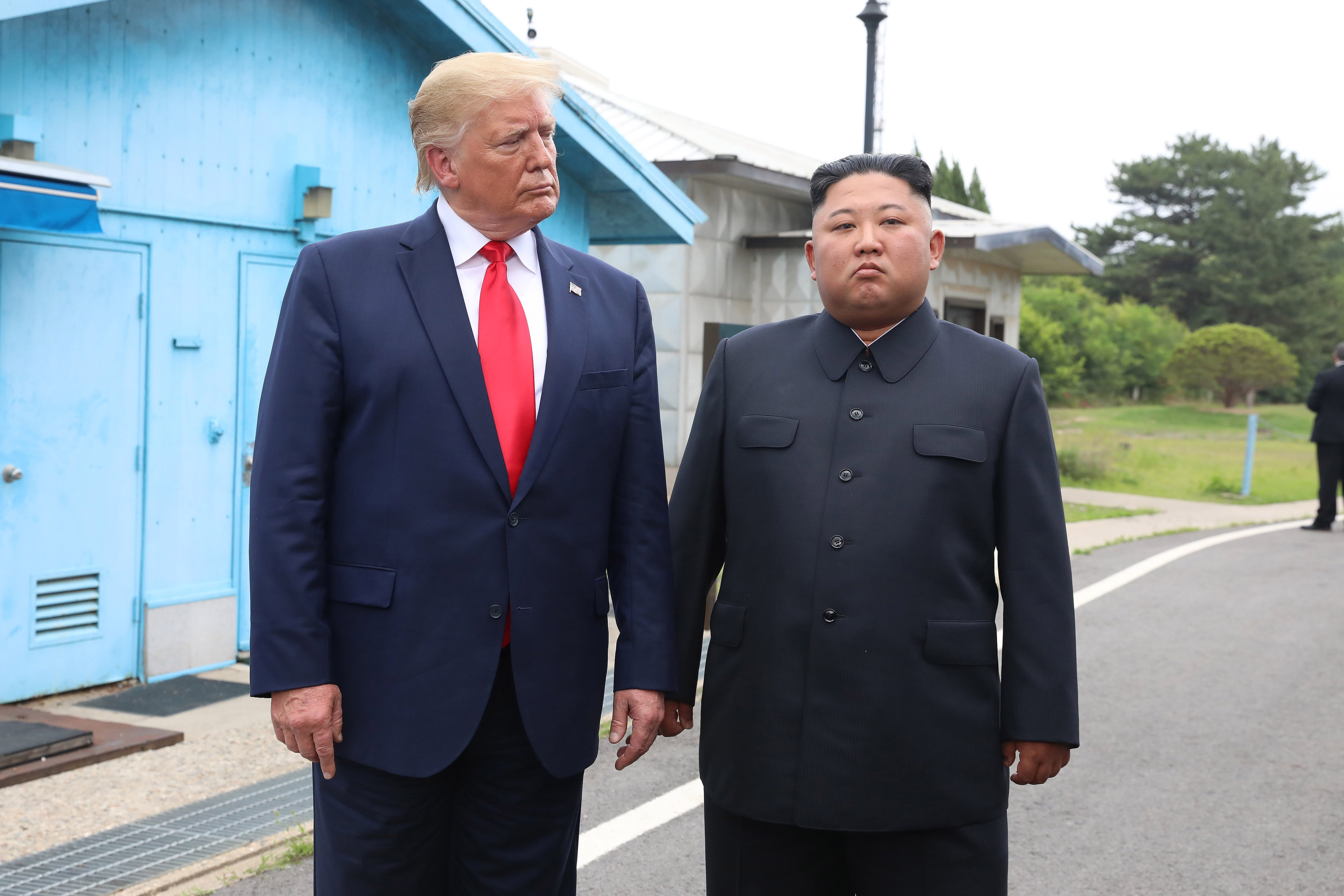
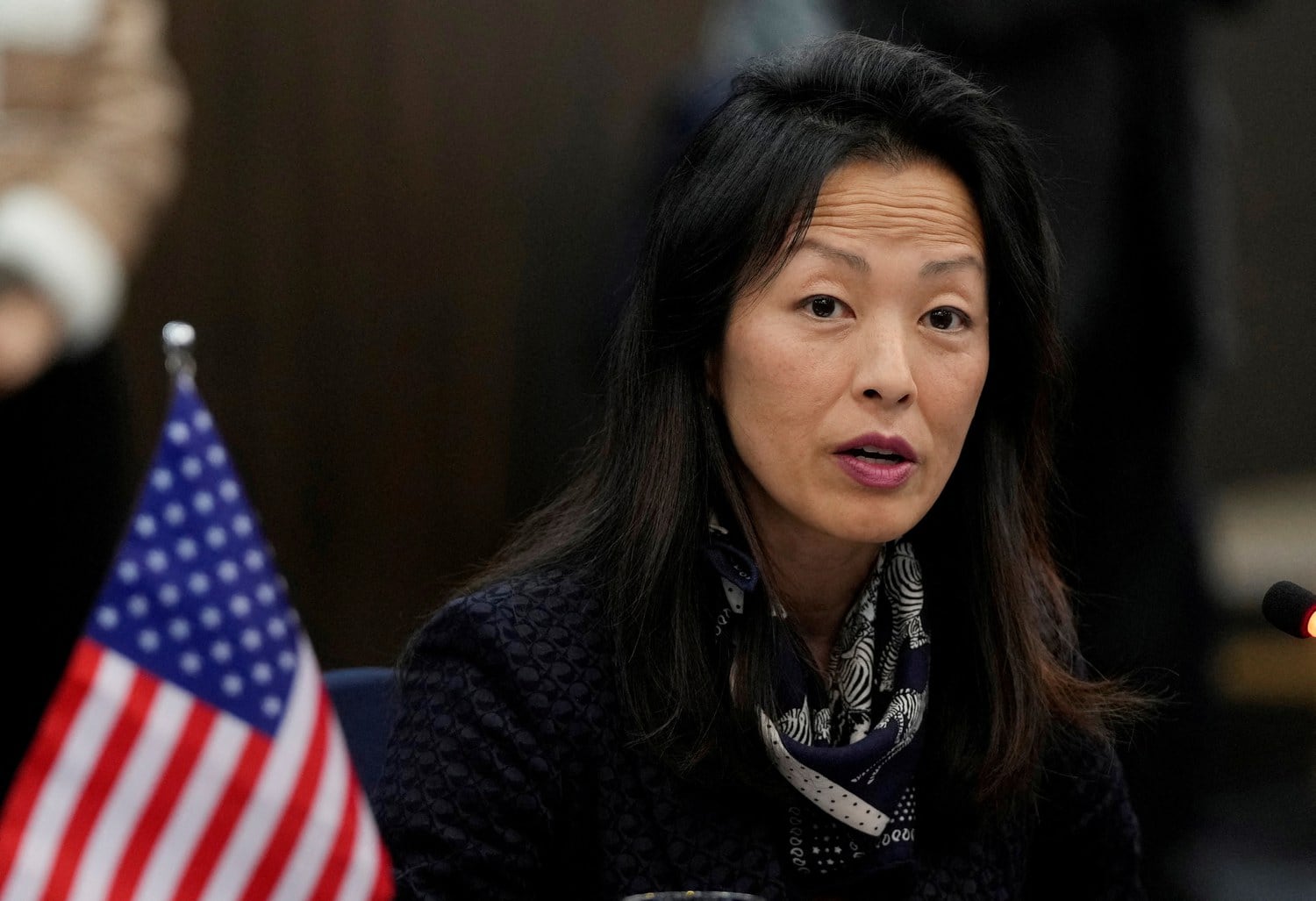
U.S. President Donald Trump and Chinese President Xi Jinping discussed a wide range of issues during their summit in Washington last week, but Washington and Beijing offered few details about any discussion of North Korea, indicating that Pyongyang was not a high priority among other more pressing issues, experts told Radio Free Asia.
In separate statements released following the summit, China’s Foreign Ministry and the White House said the two leaders did discuss the Korean peninsula but did not elaborate, whereas both statements described in detail discussions on the economy, security, or artificial intelligence.
While the discussion on North Korea was important enough to be mentioned in passing, the two leaders likely did not spend much time talking about it, Harry Kazianis, CEO of the Washington-based Rogue States Project think tank, told RFA.
“The North Korean issue is probably not even in the top 10,” Kazianis told RFA, saying that trade, Taiwan and the South China Sea were higher priorities. “So when you look at the list of items that the United States and China — and just China itself — has to confront, North Korea just slides all the way down the scale of what’s important.”
Trump-Kim IV?
Since returning to office last year, President Trump has repeatedly said he wants to follow up on three previous meetings with Kim, where the U.S. and North Korea were unable to iron out an agreement on denuclearization in exchange for sanctions relief.
Trump in August scaled back joint military exercises with South Korea and said he hoped to meet with North Korean leader Kim Jong Un by the end of the year, but North Korea has remained silent on the matter.
Still, Trump would welcome a meeting with Kim, a U.S. official told RFA on background.
“President Trump in his first term held three historic summits with North Korean Leader Kim Jong Un that stabilized the Korean Peninsula. U.S. policy on North Korea has not changed,” the official said. ”President Trump remains open to talking with Kim Jong Un, without any preconditions.”
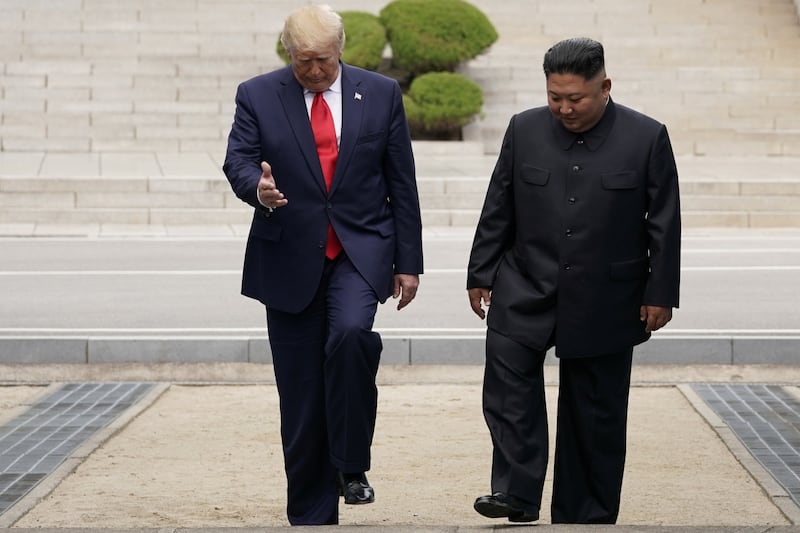
Despite the enthusiasm from the White House, the U.S.-North Korea diplomacy from 2018–2019 has effectively come to an end, Sydney Seiler, a former U.S. national intelligence officer for North Korea and a senior advisor at the Washington-based Center for Strategic and International Studies, told RFA.
“North Korea has shown no interest in talking to the United States, and has commenced this relationship with Russia — unprecedented in its nature — and then is revitalizing ties with China,” he said.
The odds of a new summit between Trump and Kim are ‘pretty slim,” Kazianis said, adding that Trump would have to do something extreme to pique Kim’s interest, like recognizing Pyongyang as a legitimate nuclear weapons state.
“The North Koreans are in the driver’s seat right now. They’re getting billions of dollars from the Russians to arm Russia for the Ukraine war,” he said. “They don’t really have anything that they want from the United States right now unless they’re going to get sanctions relief for almost nothing.”
Meeting Kim would also have to be advantageous for Trump, said Kazianis.
“He’s not going to hand more ammunition to his critics and make himself look bad on the world stage when he’s got enough problems,” he said. “So I think Trump would love to have a meeting with Kim, but there would have to be measurable progress for Trump.”
Even if such a meeting were to happen, it is unlikely that China would have a hand in it, said Seiler.
“President Trump would explain his efforts to try to make contact with Kim Jong Un,” Seiler said. “I would anticipate China’s leverage over North Korea is not likely to be expended in support of Donald Trump’s policy of trying to reach Kim Jong Un.”
Repatriating escapees
Though the extent to which Xi and Trump were talking about North Korea and Kim Jong Un at the summit is not known, ahead of the meeting, North Korean human rights advocates held demonstrations in front of Chinese Embassies in several countries urging China to halt the forced repatriation of North Korean escapees.
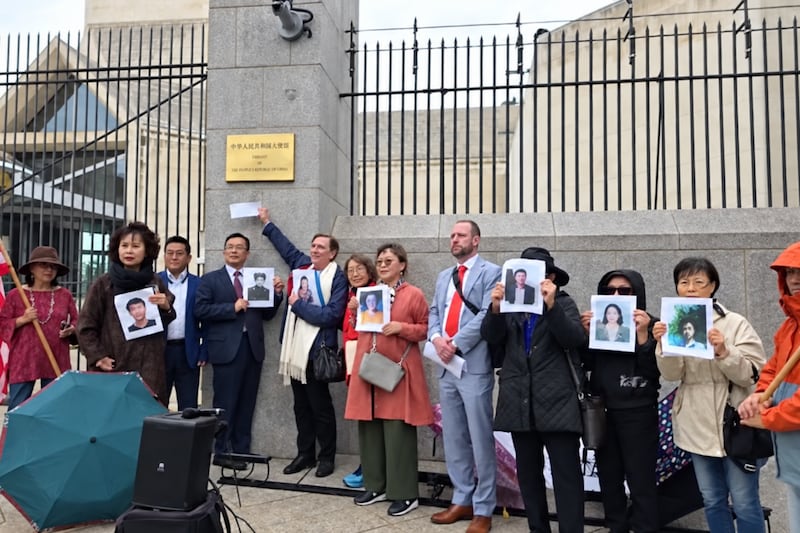
The demonstration on Sept. 22 in Washington was organized by the North Korea Freedom Coalition, joining it with similar events in 26 global cities in 20 different countries, the organization’s chairperson, Suzanne Scholte, told RFA.
“What we’re pushing for with this particular summit is that Trump will raise this horrific, inhumane, illegal policy of repatriation,” Scholte said.
Beijing classifies escapees as economic migrants and if they are caught without legal status in China, they are sent back, where many face severe punishment. But the advocates argue that escapees are refugees and should be protected under the U.N. Refugee Convention, to which China is a signatory.
“Xi wants to be seen as a world leader, and if he wants to be seen as a world leader, then he shouldn’t be sending people off to their death,” Scholte said. “So we’re asking President Trump to raise this issue again. China is a signatory to the Refugee Convention and also the Convention against Torture.”
Edited by Eugene Whong.