
As Beijing has been ramping up influence in the Pacific, island nations in the region have increasingly had to strike a balance existing economic and security relationships with Western countries like Australia and the United States, and new opportunities with China, according to Graeme Smith of the Australian National University.
Smith, who leads research teams at ANU that focus on Chinese investment, migration, military engagement, and aid in the Pacific region, told RFA’s Eugene Whong in an interview that Pacific countries must walk a “delicate tightrope” in the midst of the competing interests of Beijing and its rivals.
But he also said that at times, the tug-of-war geopolitics that permeate regional diplomatic forums can seem like a distraction when these countries are faced with more local “bread and butter issues.” The interview has been edited for length and clarity.

RFA: Let’s start off with the Solomon Islands where China has normalized a police presence in Honiara following the passage of a security pact in 2022. Do you think it could be said that the Solomons are China’s most important strategic partner in the Pacific right now?
Smith: I think they’re getting a lot of payoff for not an awful lot of investment in Solomons. Certainly, they’re really getting bang for buck. Even their police presence — it’s only a dozen or so policemen — but in terms of the propaganda value, it’s immense. To be fair, the police there have been pretty well received because they focus on community policing rather than sort of the traditional policing you might see in somewhere like Australia. So in some ways, their approach works a bit better with the local conditions.
RFA: So you would classify that police presence as propaganda?
Smith: Obviously, these days China’s all about selling models and the model of policing that they’re selling is of concern, but in terms of the number of boots on the ground that they’ve got there, it really is a very token presence. Tellingly though, all of the people there are kind of ex-peacekeepers, so they’re not really police. They’re more people on the internal security side of things.
RFA: Beijing has been putting pressure on the Pacific countries to stop recognizing Taipei in favor of Beijing, which the Solomons have done. How important is the status of Taiwan vis-a-vis Beijing’s One China Principle in the Pacific region?
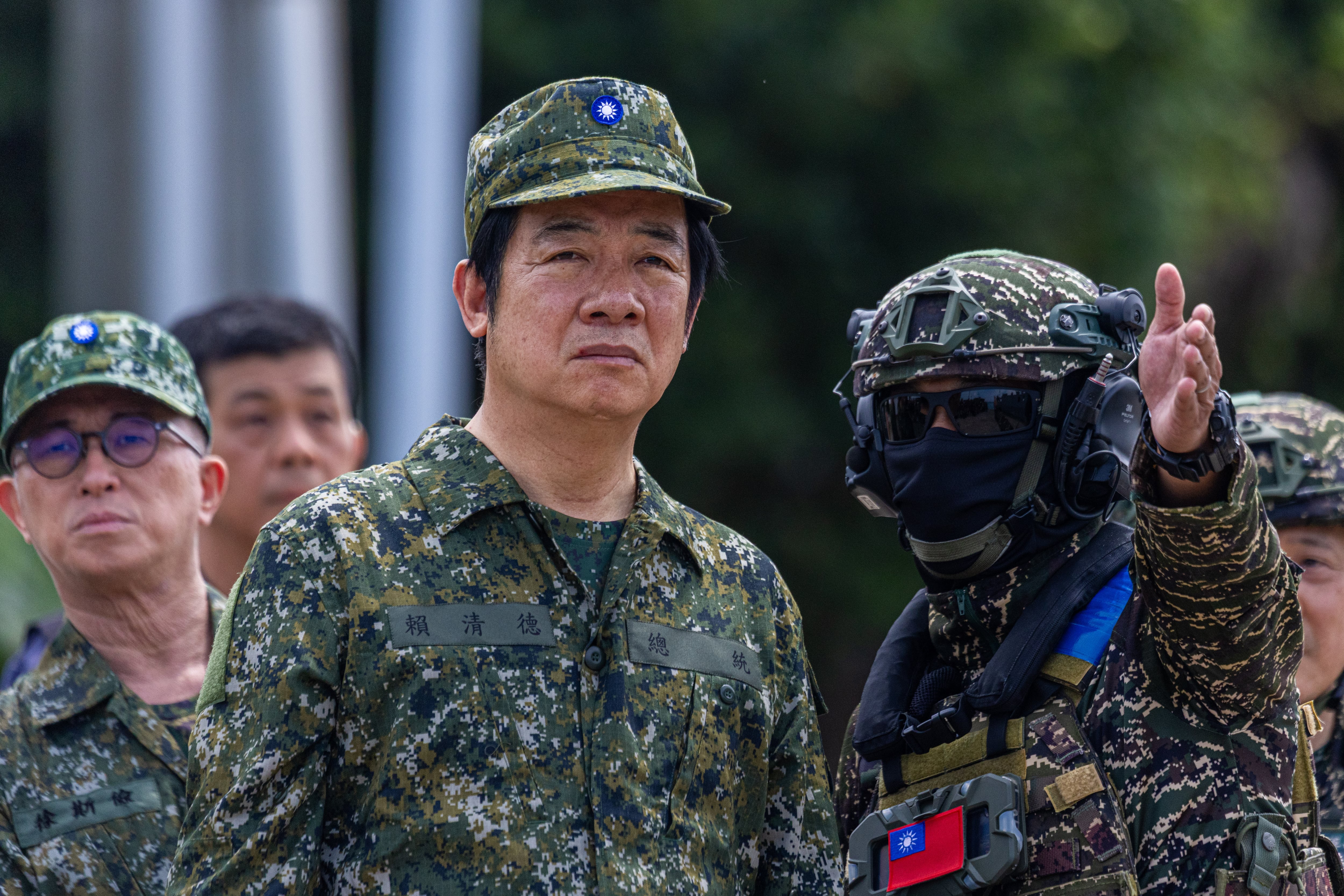
Smith: Well, it’s a pretty big part of what drives China’s behavior in the region. They still are very, very focused on limiting Taiwan’s diplomatic space. So even if a country recognizes Beijing, they’ll then be pressured to take extra steps to limit any Taiwanese presence in the country. So even commercial offices, they’ll be pressured to close those down. It still remains a big focus of China in the region, and Taiwan has gone from being a very significant presence in the Pacific to having just three allies. Interestingly though, one of them will be hosting the Pacific Islands Forum this year, so that’ll be Palau, and that could make for some very interesting theatrics.
RFA: Let’s move on then to Fiji, which appears to be in a situation where it must balance a defense partnership with Australia while also receiving investment from China.
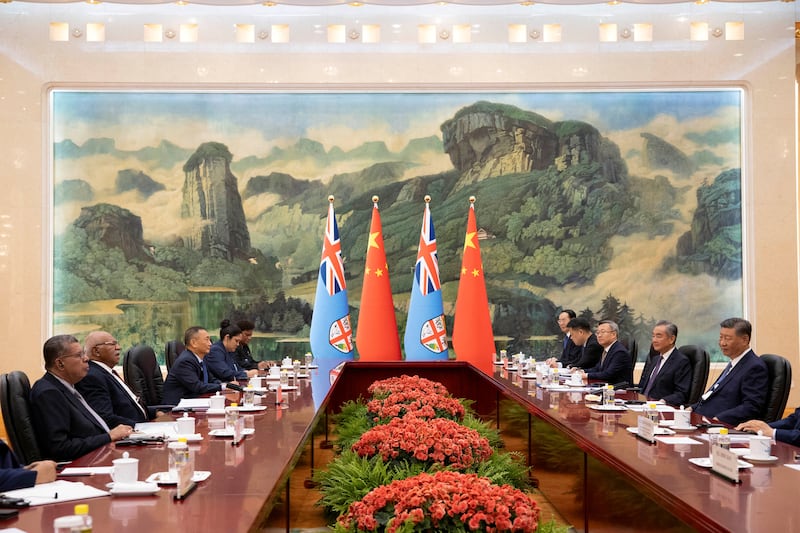
Smith: It’s been interesting because with the previous prime minister, Frank Bainimarama, they had a very loyal ally and someone who was quite dependent on Chinese diaspora funding to stay in power. With current Prime Minister Rabuka, initially he took some steps to increase Taiwan’s voice in the country. He changed the name of their representative office there in Suva, but he’s sort of slowly backtracked a little bit. And I think in many ways just had to address the reality of, you know, China is a much bigger trading partner than Taiwan with Fiji. And that’s the reality throughout the region.
RFA: Then, how difficult is it for countries in this situation to maintain the balance between China and Western countries as they compete for influence in the region?
Smith: Fiji carries that balance a bit better than most countries, and partly because it’s not as dependent on China for trade as other countries are. Its major trading partner unusually is not China, it’s the United States, and China often comes in at number three or even number four as its most significant trading partners. So that allows it to be somewhat immune to the sort of economic coercion or economic threats that other Pacific Islands are vulnerable to—the most extreme case being Solomon Islands, which has, usually, two-thirds of its exports going to China.
RFA: Let’s move on, then, to Papua New Guinea, which similarly maintains security ties with the U.S. and Australia, but recently entered into an economic partnership with China in November of 2025 to boost exports of agricultural products and fisheries.
Smith: PNG’s got an election year on the horizon, so that does change the equation there. It means that the politicians are going to look for propaganda victories. PNG’s been interesting in that they, in terms of their defensive cooperation, pushed for a treaty with Australia. So this was an initiative that came from the PNG side, not from the Australian side, and got that across the line.
So in terms of security partnerships, they’re much more integrated with Australia and the U.S. than any other Pacific country outside of the Northern Pacific. Meanwhile, in many ways, the trade deal was kind of, “Yeah, we’re sorry, we still want to trade with you.” And they do. They export a huge amount of Liquefied Natural Gas not just to China, but also to Taiwan. So they have to walk a pretty delicate tightrope. And in an election year next year, Prime Minister Marape will be keen to get some infrastructure projects underway. So certainly he’ll be looking to China to bankroll some of those before he goes to the next election.
RFA: So then is maintaining the balance between China and Taiwan just as difficult? Or is it just that money is so important that it makes these kinds of problems go away?
Smith: In terms of the formal diplomatic space, really, Taiwan doesn’t have a lot of wiggle room there, even less than what it has in Fiji, and that’s kind of the quid pro quo. On the other hand, if you look back to the Asia-Pacific Economic Cooperation (APEC) Forum that was held in Papua New Guinea in 2018, Taiwan was there.
As long as it’s just economics, I think Taiwan is still given a little bit of leeway. It’s when it comes into actual diplomacy that China is a little bit uneasy, because, to be honest, a lot of China’s economic prosperity comes from Taiwan. The two countries economically are very tightly integrated, and this is something that China is not at all unhappy about. They like tight integration because it enhances their argument for unification much more strongly than anything else.
RFA: Let’s pivot to the countries that have entered into the Compact of Free Association with the U.S., which are Palau, the Marshall Islands, and the Federated States of Micronesia, which signed an economic framework agreement with China in late 2025.
Smith: FSM is the one of those that recognizes Beijing, and they switched to Beijing some time ago. There was some noise from the outgoing president that he would like to switch to Taiwan, but that of course did not happen. In doing so, he sort of flagged a lot of interference that had been going on from China within FSM. But a lot of the drama has been around getting the compact negotiated. That seems to have largely gone through. Aid cuts that have affected a lot of the Pacific haven’t really hit the compact states because a lot of their money comes through the U.S. Department of the Interior, not through the State Department. So they’ve been largely unaffected.
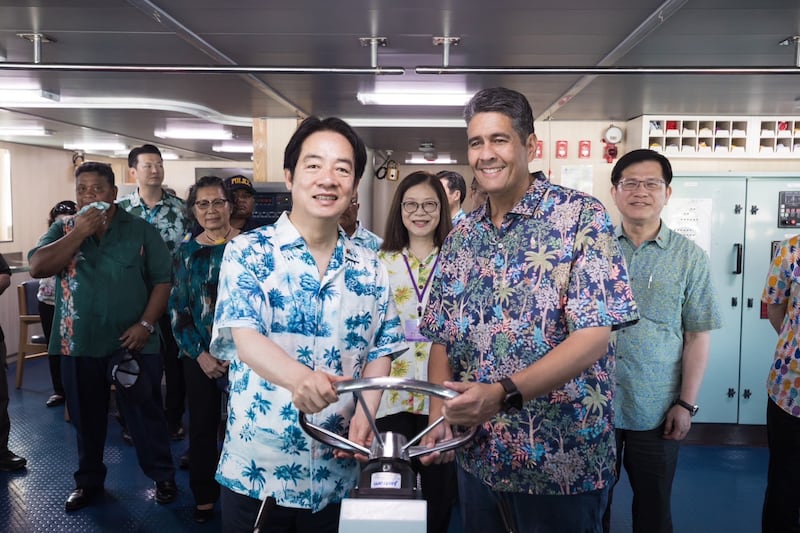
But the leadership of all countries is quite different. In Palau President Surangel Whipps Jr., you have a very pro-, almost Trumpian type figure. He quotes Ronald Reagan in his speeches, but his term is up after this electoral term. So what happens after that will be of interest and concern to the U.S. In the Marshall Islands, it’s always a little bit unstable, but certainly they’re still very much in the U.S.-Taiwan camp. And the FSM, yeah, they’re always interesting to watch because you have these independence movements within the FSM, and you’re never sure when they’re going to bubble to the surface.
RFA: The 2026 Pacific Islands Forum will be in Palau, and we’re about five and a half months out from that. Should we expect that China and U.S. competition will be a major theme of the event? And if not, what other key issues would you say would dominate the discussions at this forum?
Smith: Most of the Pacific Island Forum members are kind of a bit annoyed by the distraction of geopolitics. They want to talk about the bread-and-butter issues of poverty, of climate change, of things that actually affect their daily lives. So this Punch and Judy act over who sits where and who gets recognized really ticks them off. The Solomon’s ended up inviting neither China nor Taiwan to the last one, or America for that matter.
It’s unlikely Palau will follow suit. They’ll definitely want to have Taiwan in the room in some form. How China reacts to that will be really interesting to watch. But from the point of view of the member countries, this is just an annoying distraction to them because they’re facing existential threats. They’re looking in many cases to migrate in the face of current climate change or the prospect of future climate change. So they’ve got some pretty big issues to discuss, and Taiwan-China is from their perspective not one of them.
RFA: So these issues would be more important than worrying about which power you’re aligned with militarily or economically, correct?
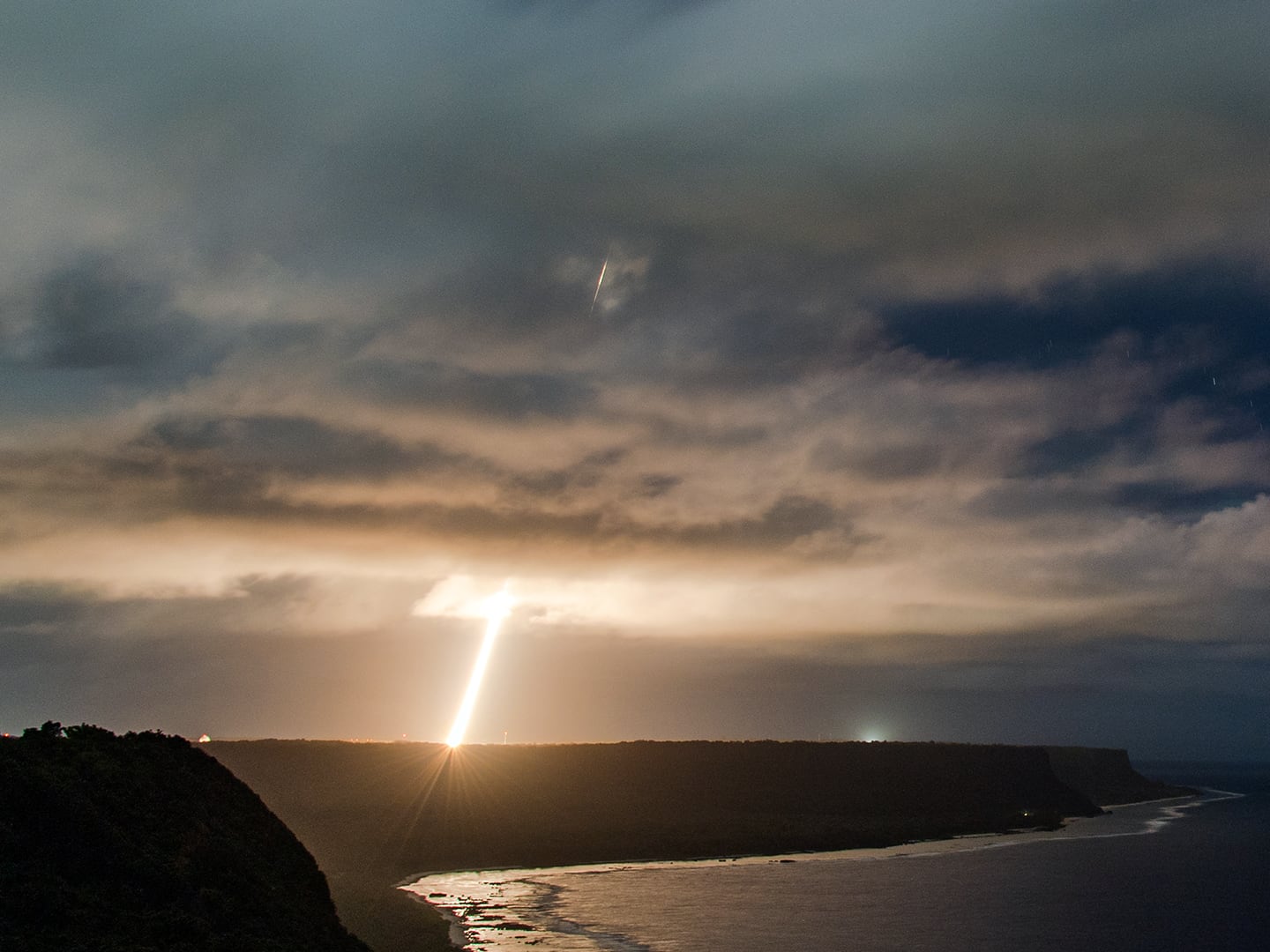
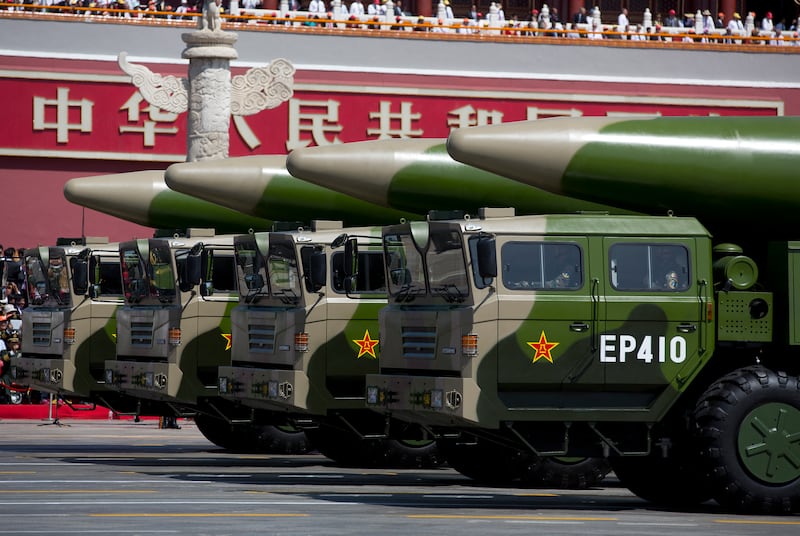
It varies among the member states. Obviously, if you’re sitting in the Northern Pacific, it’s more of an existential question to you than if you’re sitting in Solomon Islands, well away from any prospective fighting over Taiwan. Certainly for Guam and countries like this that aren’t full PIF members, if you have a missile called the “Guam Killer,” obviously it focuses your mind in a way that it doesn’t for Tonga or Samoa or these other places that are well out of the firing line. So there is division within the PIF over how much they care about this. But by and large, the South Pacific nations see it as a somewhat annoying distraction.
RFA: Why is competing influence in the Pacific so important in a global sense?
Smith: The geopolitics matter in the sense that if there is a conflict over Taiwan it is quite an important region. The U.S. Navy would have to sail through that region to retake Taiwan should they choose to do so, which I have to say doesn’t look terribly likely under the current administration.
And it is important in the sense that in these countries, the extreme case in the Pacific would be Kiribati where China’s influence actually starts to corrode the polity … where you have a government that has been adopting very restrictive measures, often at the encouragement and certainly at the inspiration of China.
You can’t take a photo in front of the government building in Kiribati without someone coming up to you and saying “Hey, don’t do that.” And that certainly would never have happened 10-15 years ago. So it can have a corrosive effect. Solomon Islands would be another example where you’d see it having a slightly corrosive effect on politics. Politics has never been terribly clean in Solomon’s anyway, to be frank, but it certainly hasn’t had a terribly positive impact there either.
Edited by Charlie Dharapak.