
MANILA, Philippines—Washington is planning a fuel depot in the southern Philippines that could support humanitarian and maritime security missions of its key Southeast Asian ally, which is locked in an increasingly hostile territorial tussle with China.
The presence of the American facility will “serve as a deterrence” to China, but also signals the strong defense relationship between the allies, Rear Adm. Roy Vincente Trinidad, the Philippine Navy’s spokesman for the West Philippine Sea, said on the sidelines of a maritime security forum in Manila.
Manila calls the part of the South China Sea that is within its exclusive economic zone as the West Philippine Sea. Trinidad said the plan was still subject to negotiations, but that it is covered under the Enhanced Defense Cooperation Agreement and the Visiting Forces Agreement (VFA) already existing between the two countries.
Both agreements give the legal cover for America to rotate troops and preposition equipment in the Philippines, where Washington once maintained its biggest overseas naval base.
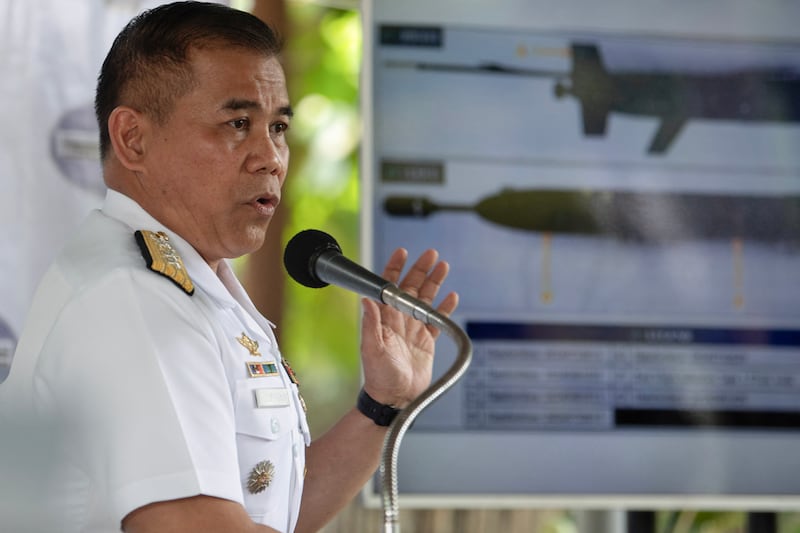
“They are designed to support our response capability for HADR (humanitarian assistance and disaster response), maritime security and support and sustain our forces deployed, not only the West Philippine Sea, but even the southern border. We welcome this development,” said Trinidad, adding that the facilities would still be under Philippine control.
While no specifics of the plan had yet been released, the Pentagon was looking at opening a Defense Fuel Support Point, or DFSP, in southern Davao region by 2028 capable of supporting over 40 million gallons of fuel and lubricants.
‘Geostrategic revaluation’
That the U.S. is considering Davao for the DFSP amounts to a “geostrategic revaluation” of the region, Professor Chester Cabalza, founder of the Manila-based think tank International Development and Security Cooperation, told Radio Free Asia.
“The American refueling depot to be located in the Southern Philippines can provide a critical alternative to existing ports in Manila and Subic,” he said. “The projected hub opens a broader strategy of maritime deterrence and logistical resilience.”
At the forum, Trinidad refused to publicly divulge details of the project because they are being finalized. But he sought to assure the public that the facilities will remain “under our control,” he said, referring to the Philippines.
Top security and defense officials attended the forum which comes amid hostilities in the Middle East that have prompted an examination of fuel and energy supplies across the South China Sea and Pacific regions.

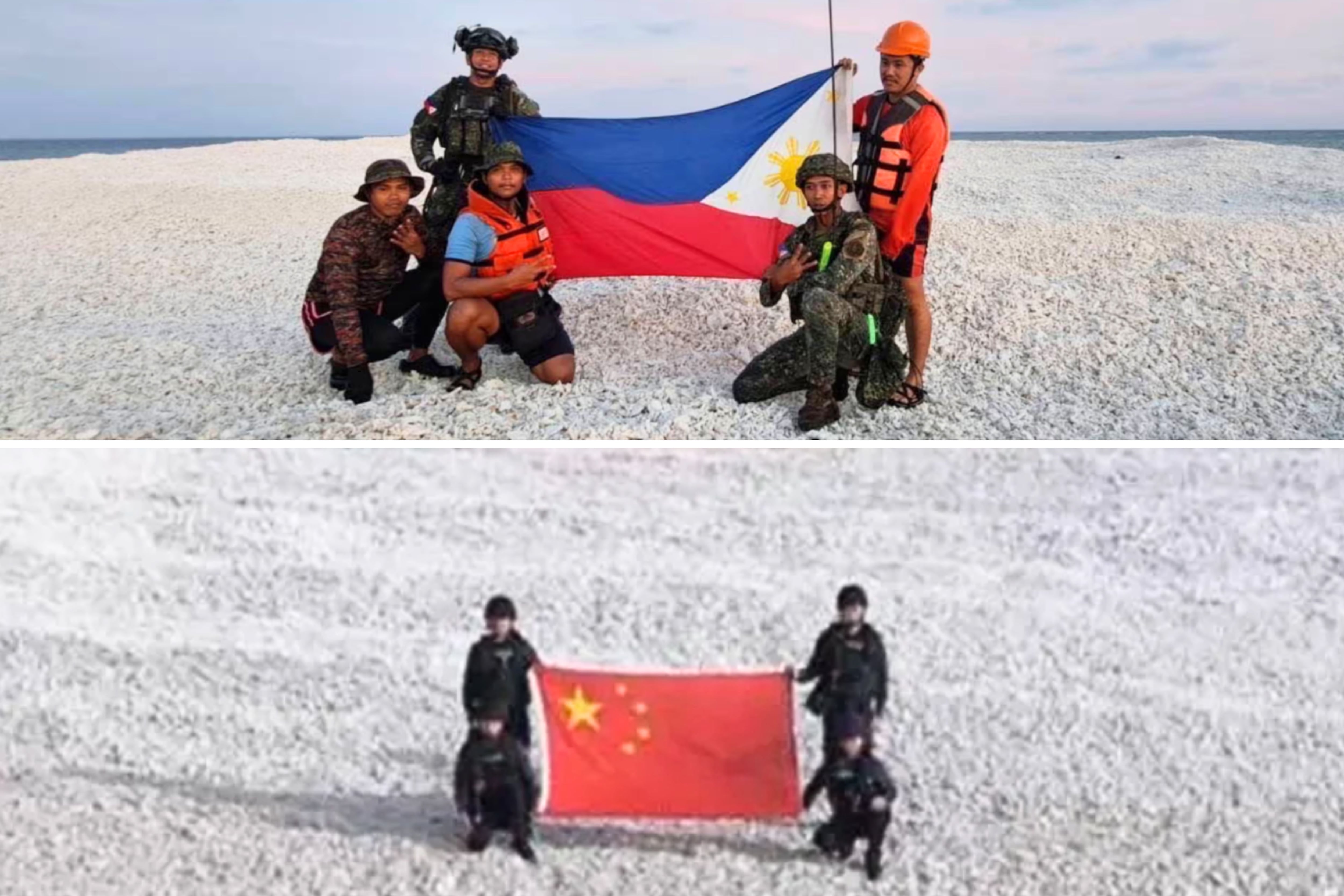
The proposed facility could support Philippine efforts at monitoring and protecting its interests in the South China Sea, where it has overlapping claims with China and other Southeast Asian countries. While its neighbors have been peacefully trying to resolve the issue, China in the past few years has become increasingly assertive.
Asked if the Philippines was not concerned that the proposed facility would give the Chinese another reason to step-up harassment, Trinidad said, “The greater risk to our security is the lack of a credible deterrence.”
“The greater risk is to have no deterrence at all. So, we welcome these facilities,” he said. “These facilities will help allow the AFP to perform and to sustain these operations. Hence, they serve at a very strong deterrent posture. Thus, we welcome their presence.”
Maritime ‘bullying’
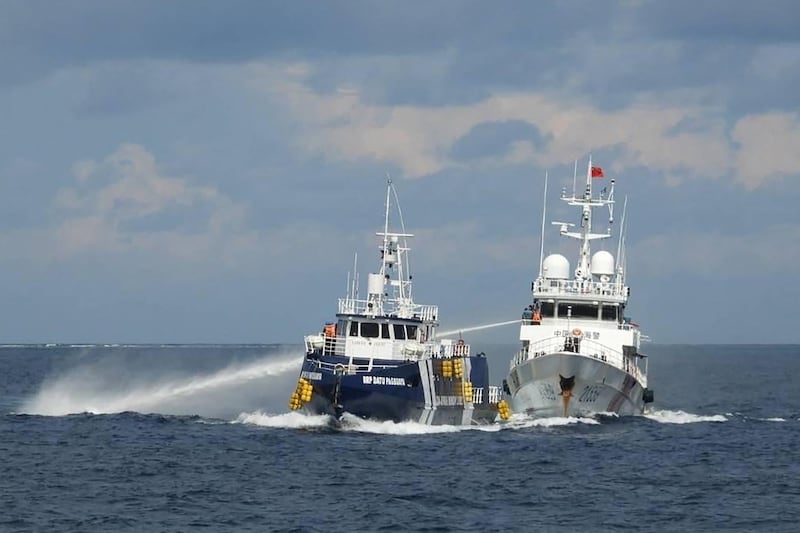
The China Coast Guard, or CCG, has harassed Philippine government vessels and aircraft to support local fishermen in the region, often deploying militia vessels as an intimidation tactic. On Thursday, the Philippine Coast Guard, or PCG, denounced a “clear and deliberate act of bullying” by the CCG for firing flares directly at a Philippine government airplane conducting a maritime patrol on the Panganiban and Zamora reefs in the South China Sea.
The Chinese also sent radio transmissions during the incidents, brazenly claiming ‘indisputable sovereignty’ over the reefs, the PCG said. The claims are part of Beijing’s “expansionist agenda and repeated violations” of international law, it added.
“These reckless and aggressive actions by China represent yet another escalation in their campaign of intimidation and harassment,” the PCG said, adding that firing flares into the aircraft endangered the lives of the crew aboard.
Addressing the conference, Phillipine Armed Forces chief Gen. Romeo Brawner Jr. stressed that while the current geopolitical environment had become more complex “dialogue, mutual respect and consensus are very important.”
“These are not abstract ideals. They are the very conditions that have allowed our region to grow, to connect and to prosper. And these are the principles that we must continue to uphold,” Brawner said.
“At the same time, we must be clear eyed about the changes around us. Our maritime domain is increasingly shaped by the shifting geopolitical dynamics, evolving security challenges, rapid technological advancement and the intensifying effects of climate and environmental pressures,” he said.
He said the Philippine military believes that “maritime security is both a national duty and a shared responsibility.”
“We remain committed to protecting our sovereignty and securing our maritime interests, consistent with international law and in a manner that contributes to regional stability. We will continue to act with professionalism, discipline and restraint,” he stressed.
He called for stronger collective efforts to boost maritime domain awareness, while strengthening confidence building measures to “reinforce trust and reduce the risk of miscalculation.”
The Chinese Embassy in the Philippines did not respond to requests for comment.
Edited by Eugene Whong.