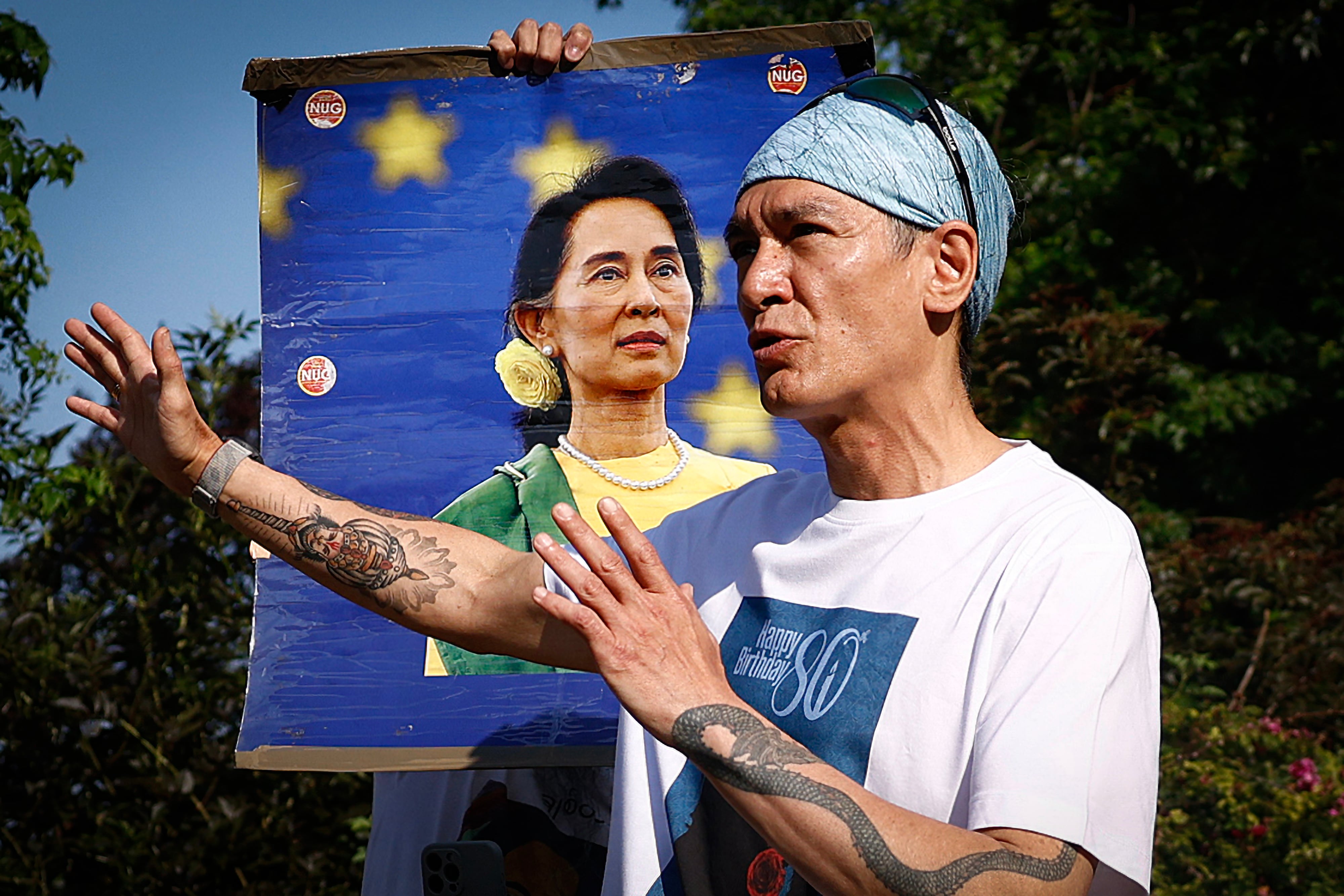
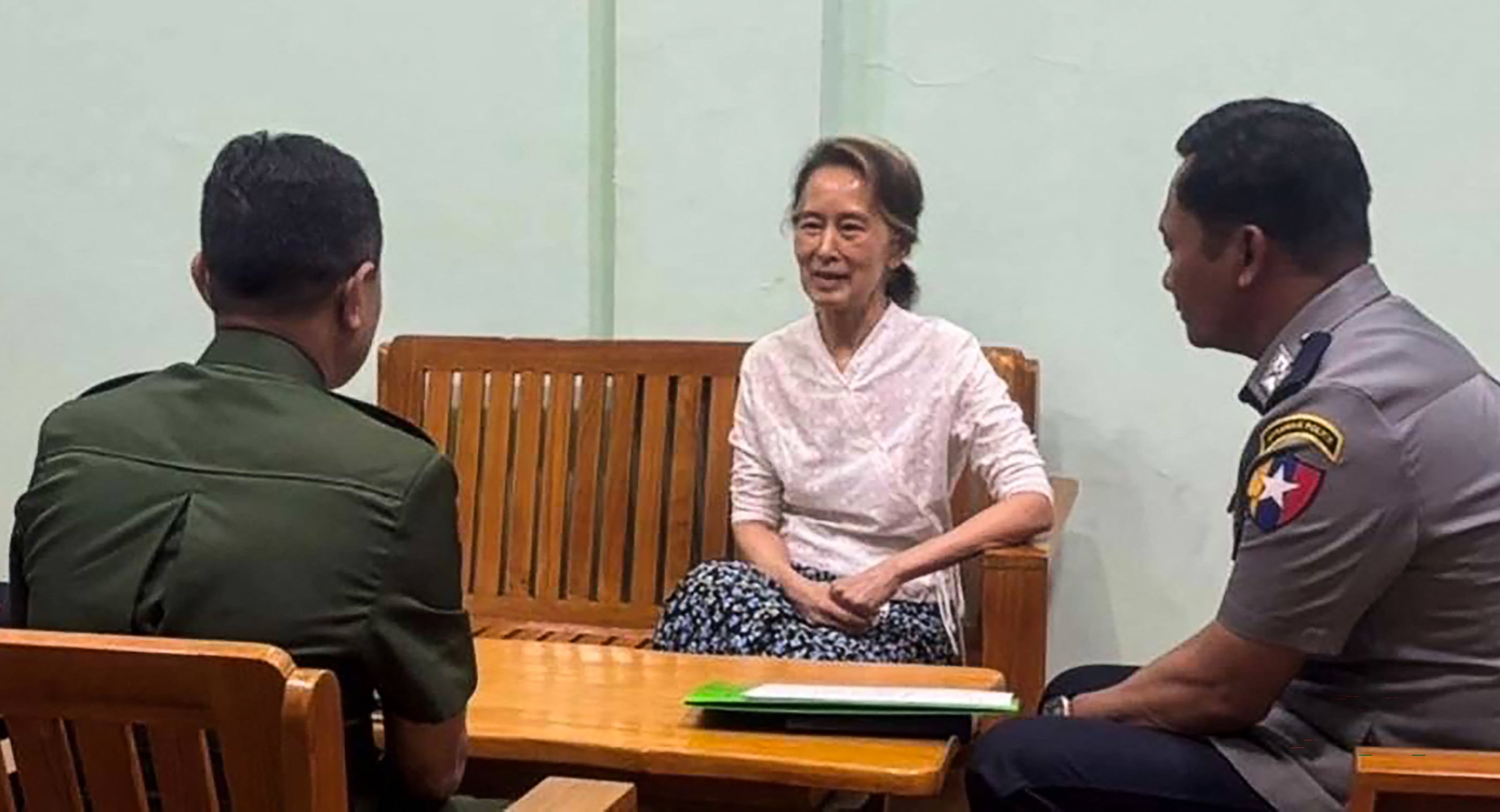
Myanmar’s military-backed government announced on Thursday that former leader Aung San Suu Kyi – currently under house arrest – was allowed to talk for 20 minutes to her son Kim Aris at 2:30 p.m. via a call placed to the Myanmar embassy in London, where Aris resides.
He speaks in an exclusive interview with Radio Free Asia.
Radio Free Asia: After more than five years without direct contact, how did you get the opportunity to speak with your mother and how did the Myanmar Embassy in London reach out to you? How was the call arranged?
Kim Aris: I was informed through the British Foreign Office here that the call may take place. This was last week. And then earlier this week, they confirmed that it would take place, and they accompanied me to the Burmese Embassy this morning.
RFA: During your conversation, did Daw Aung San Suu Kyi mention anything about her health or her daily life?
Kim Aris: Well, she was more concerned about my health and the rest of the family than anything else. But obviously, I asked after her health and how things were, where she is. She wasn’t able to reveal too much, but I know that she’s been held in some residence, I believe in Naypyidaw, and she sounds healthy. But at the same time, I know that she is in some pain because her hand is not very well; she has tendonitis. So at times, the pain is quite extreme, and I think she is even unable to use that hand at times. Nothing too clear. I know that she’s getting a regular six-monthly checkup, but I know that will be a military doctor, so it’s not like having her own personal doctor.
RFA: Do you know whether she has any access to news from the outside world?
Kim Aris: I don’t think she does. As far as I’m aware, she has no radio or television and doesn’t get any newspapers or anything like that. We know that the conversation will have been monitored and recorded, so we can’t talk about anything sensitive. Besides which, there was a lot to talk about just talking about what’s happened in the family over the last five years. So that’s what we talked about.
RFA: During these recent developments, do you believe there could be a political breakthrough on the horizon?
Kim Aris: I sincerely hope so. I think everybody is tired of the fighting now, and people are starting to think that they need to start talking to each other. But I think the first thing that needs to happen before anybody will start talking is the political prisoners, including may may (Burmese expression for “mom”), need to be freed.
RFA: Some observers believe the Myanmar authorities may be looking for a way out of Myanmar’s ongoing political crisis. What is your take on this?
Kim Aris: Well, it’s very clear the military have been trying to be more appealing to the international community, especially following their elections at the end of last year and the beginning of this year. So they are doing whatever they can to try and get people to work with them again. But people need to remember that the military haven’t actually abided by any of what they have said they will have done over the last five years. They have not met the five-point consensus, and yet people are starting to re-engage with them without having seen any evidence of actual progress.
RFA: The Myanmar military authorities have recently been releasing more information about Daw Aung San Suu Kyi. Do you see this as a reason for optimism? What do you think the Myanmar military’s move might be?
Kim Aris: I always have hope, and I do hope that this will result in actual progress and that she will be free before long. And even before she’s free, I want more regular contact with her, and I want to know that she’s receiving external medical treatment.
RFA: Did they promise you could speak with Daw Aung San Suu Kyi, your mother, regularly?
Kim Aris: No, I haven’t heard anything more on that yet.
RFA: You made it very clear that your mother should never be used as a bargaining chip for diplomatic recognition, sanctions relief, or political advantage. You also urged the UK government and others not to trade humanitarian rights for political legitimacy. And now, one of our RFA audience members raised a difficult question. They asked if negotiation and compromise may be necessary to secure your mother Daw Aung San Suu Kyi’s release. How would you respond to that?
Kim Aris: Well, I realize there are people who have been calling for my mother’s release all the time for the last five years, and without their support, I wouldn’t even have gotten this far. And people do have to negotiate—that’s very clear. At the same time, they should not be legitimizing the military by open discussions like this and welcoming Min Aung Hlaing to their country without actually having secured progress.
RFA: After hearing your mother’s voice for the first time in more than five years, what message would you like to share with the Myanmar people or international community?
Kim Aris: Well, I would say she is sounding well and strong still, but at 81 years old and with ongoing health concerns, and we still don’t know what conditions she’s really been kept under, I’d ask for everybody to continue to fight for her freedom. Burma needs to come forwards, and may may is part of that process still. People need to talk to one another, and one of the few people who is actually able to get people to talk to one another is may may. So please, do not stop fighting for her freedom. Fighting for her freedom is also fighting for the freedom of Burma.
Edited by Charlie Dharapak.