Caviar, wine, and foie gras served to Russian tourists in high-end Pyongyang restaurants is not necessarily evidence that exporters are violating sanctions that prohibit luxury items shipments to North Korea, but in the spirit of the sanctions these should be considered luxury items, a former member of the U.N. sanctions committee told Radio Free Asia.
Russian travel agency Vostok Intur is offering a gourmet tour that includes meals at many of the places frequented by North Korean elites: the twin-tower Koryo Hotel; the iconic Okryu-gwan restaurant, ground zero for Pyongyang’s high-class food culture; and a cruise ship sailing down the Taedong River which runs through the city.
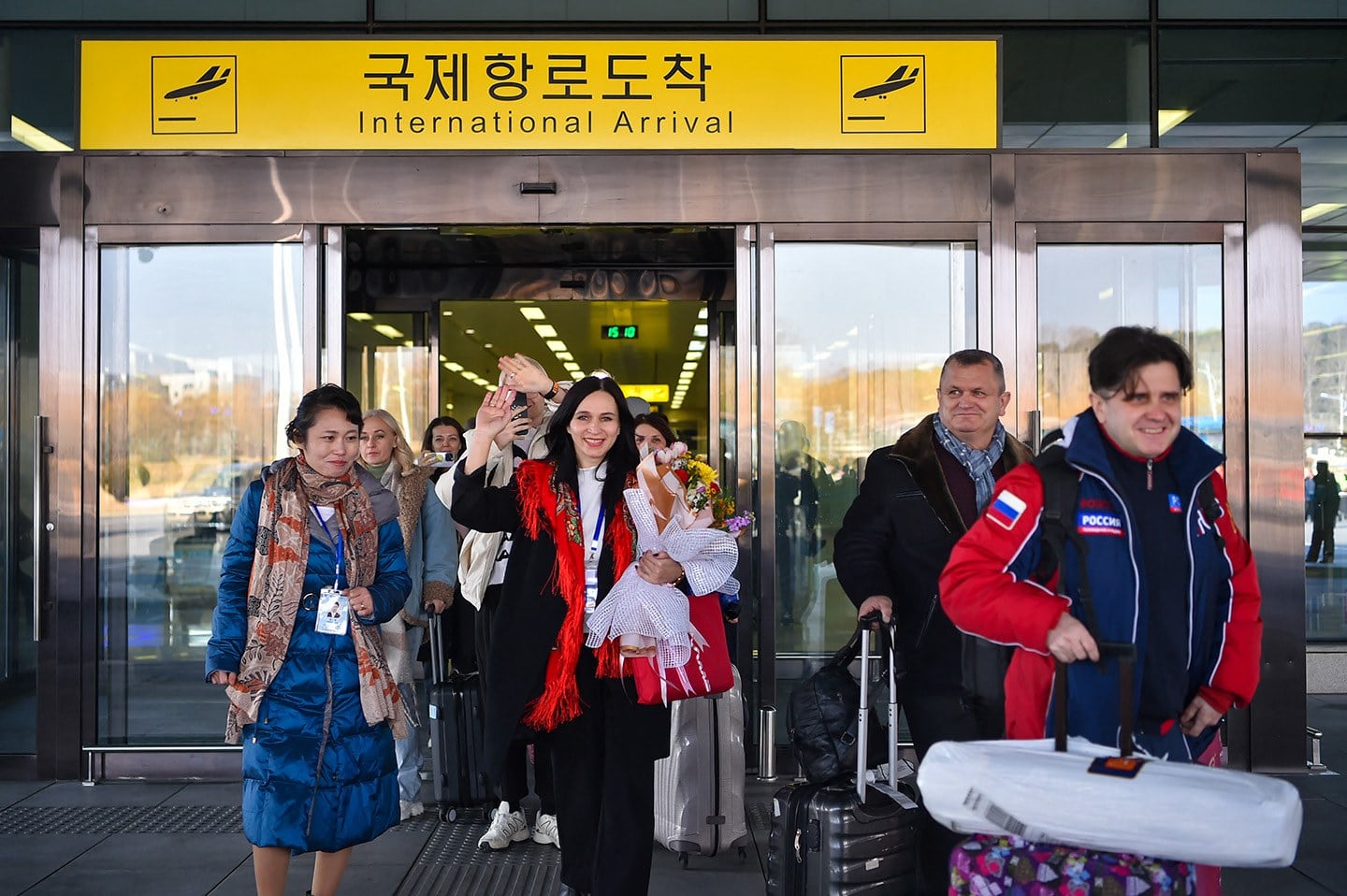
The Russian Union of Travel Industry reported Monday that the travel company had completed its first gourmet tour with each participant paying roughly US$2,000 for the experience. The tour package includes an itinerary visiting restaurants inaccessible on standard tours, Inna Mukhina, the director of the travel agency, said in the report. The tour route and the restaurants are approved by North Korean tourism authorities, and it includes a stop at a restaurant called Rungra, where caviar and foie gras is served.
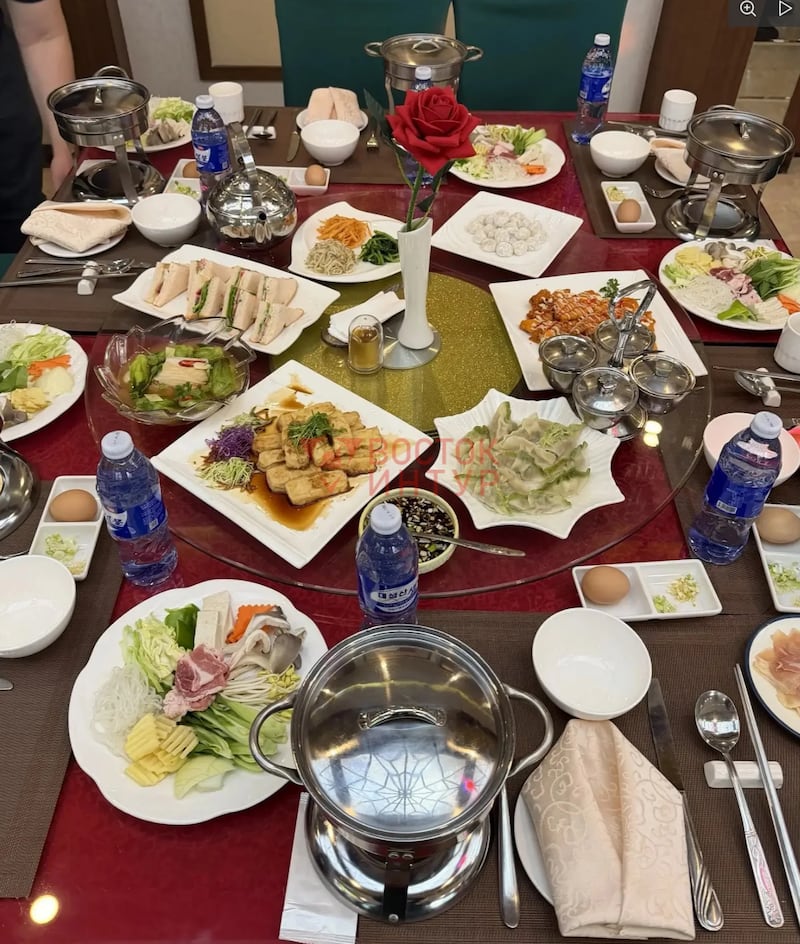
But whether this is a violation of sanctions depends on the interpretation of U.N. resolution 1718 – adopted by the U.N. Security Council in 2006 as a means to prevent the flow of cash and resources into North Korea’s nuclear missile programs. The resolution lists 14 luxury items that are banned for sale to North Korea, but caviar and foie gras are not among them.
The sanctions document should be viewed broadly rather than narrowly, Shuji Sue, a former member of the U.N. Panel of Experts on North Korea sanctions, told RFA Tuesday.
“Because the luxury goods are not specifically exemplified, this has always been a subject of debate when the panel of experts drafts reports,” he said. “I reiterate that I view caviar as a luxury item and consider it to be a luxury product prohibited by the Security Council.”
The European Union designates caviar and its substitutes as prohibited luxury goods, and the U.K., Japan, and Singapore also ban the export of caviar to North Korea. Wine is also subject to the luxury goods export ban by the E.U., the U.S., and the U.K.
Vostok Intur plans to regularize gourmet tourism starting in 2027, once a month with a maximum of 10 people per trip. According to the itinerary released on the agency’s website, tourists will visit the Koryo Hotel restaurant, the Hwasong Kumgang restaurant at the top of the Pyongyang Clock Tower, the Taedong River floating restaurant, and Okryu-gwan.
The price of next year’s group tour package announced by the travel agency is approximately $1,100, which includes a basic cost of 45,000 rubles (about $550) plus $550 for local accommodation expenses. Meal costs are calculated separately.
Even if the sanctions resolution is interpreted broadly, the caviar would not be a violation if it were produced domestically. RFA asked Vostok Intur about the source of the ingredients, but they did not respond.
Domestic production?
Though the source of the caviar has not been confirmed, North Korea has been farming sturgeon since the reign of Kim Jong Il, the father and predecessor of current leader Kim Jong Un. The state-run Korean Central News Agency reported in 2013 that the younger Kim visited a fish farm in South Hwanghae province, and said that his father’s last order before he died in 2011 was to raise as many sturgeon as possible so they could be prepared and served at Okryu-gwan.
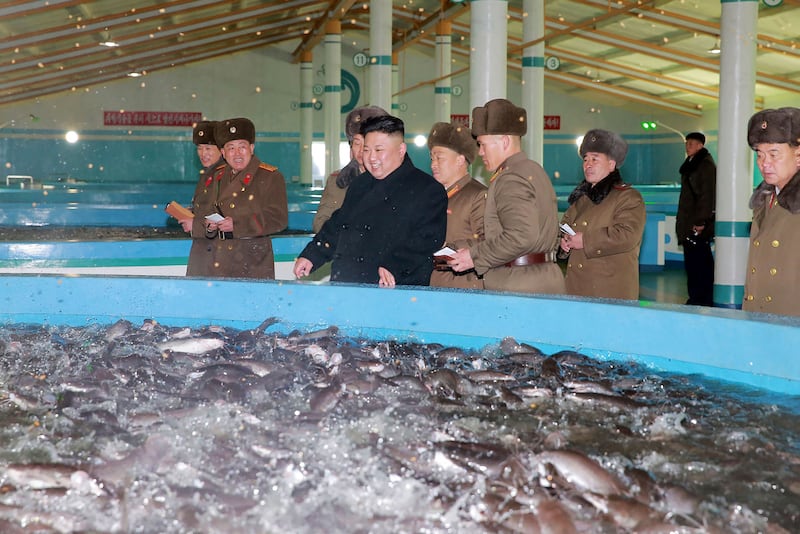
RFA was not able to confirm whether North Korea produces caviar domestically, but if it does, it can only be in small quantities, Lee Hyunseung, a former member of the North Korean elite whose family fled North Korea in 2014 and who now resides in the United States, told RFA.
“We cannot confirm the exact production volume, but as long as fish farms exist, domestic production is possible,” said Lee, who works as a senior researcher at the Maryland-based Global Peace Foundation. “However, mass production is not feasible. Clearly, if the number of tourists increases and tourism programs are operated more frequently, imports would be necessary to guarantee the required quantity.”
China is the world’s largest producer and exporter of sturgeon caviar but Beijing’s official export statistics show no record of the delicacy being sent to North Korea between 2018 and 2025. Russia, meanwhile, has not disclosed bilateral trade statistics since 2022, meaning that potentially Chinese caviar could enter North Korea via Russia.
Inequality exposed
The gourmet food tours are a stark contrast to the lifestyles of the typical resident of North Korea, a country that struggles with chronic food shortages, where a month’s salary cannot even buy a bag of rice.
Lee said that restaurants such as the Koryo Hotel or the Taedong River cruise ship can cost up to hundreds of dollars for a single meal, making them inaccessible to most people living in North Korea.
RFA reported last month that an average factory worker earns 20,000 North Korean won, about 30 US cents at the market exchange rate.
According to Vostok Intur’s itineraries, the tourists’ lunches and dinners are ordered and paid for separately, with an average cost of $20 per meal. This amount is equivalent to approximately five and a half times the average worker’s annual salary.
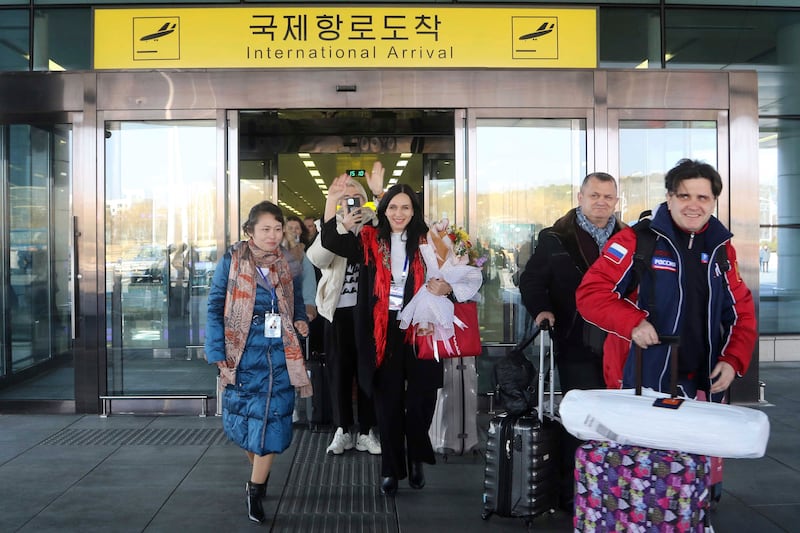
“Russians travel to North Korea like this, pay $2,000, and enjoy a luxurious trip for three nights and four days,” said Lee. “I wonder how many people in North Korea can actually afford to pay $2,000 and enjoy that kind of luxury. Even the wealthy elites in the country simply cannot spend like that.”
According to South Korea’s Ministry of Unification, the cash-strapped North Korean government regards tourism as a key means of earning badly needed foreign currency.
“These tourism profits will also eventually be handed over to Kim Jong Un through the General Administration of National Tourism,” said Lee.
Edited by Yi Yongin in Korean and Eugene Whong in English.