Myanmar’s military-backed government is increasingly resorting to attacks on civilians as a means to bring the rebel Arakan Army in the western coastal state of Rakhine to the negotiating table, Rakhine politicians and analysts told Radio Free Asia.
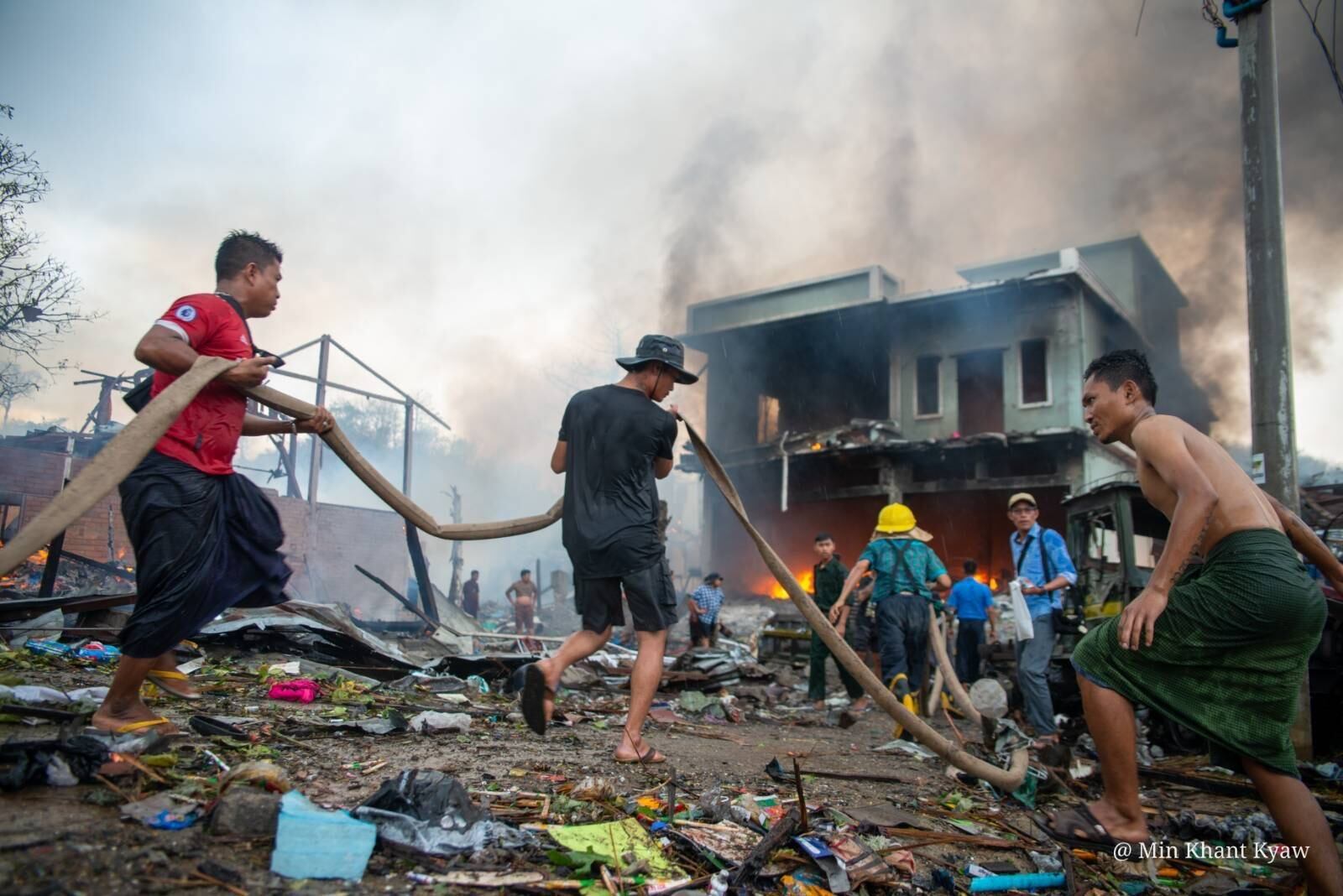
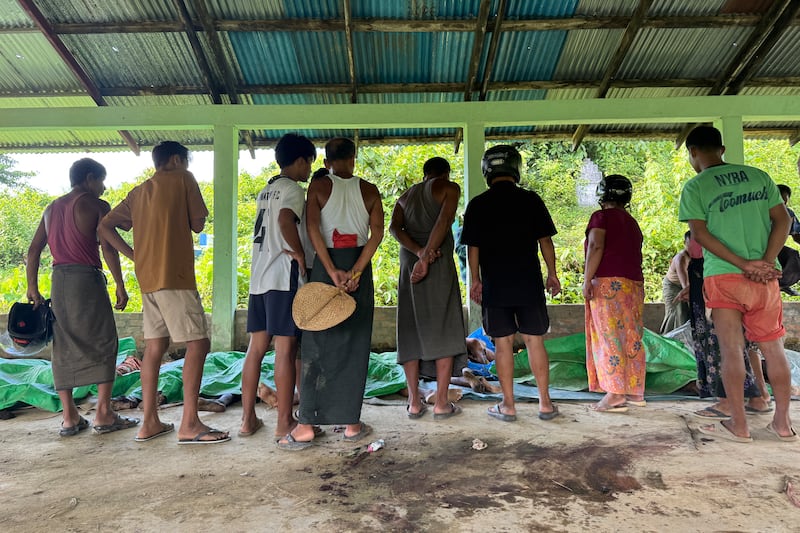
The government launched an airstrike on the town of Kyauktaw, dropping bombs on a crowded marketplace and other civilian areas killing at least 50 people, including children and pregnant women, according to the Arakan Army, or AA, an armed ethnic group which controls most of the towns in Rakhine.
The U.N. Human Rights Office released a statement noting that this attack was one of the deadliest airstrikes in Rakhine State since the military took control of the country in a coup in 2021. Fortify Rights Friday released a statement saying that the attack could constitute a war crime.
Several other ethnic groups, some of whom had been allied with and fought alongside the AA after the coup, have begun participating in peace talks over the past few months. The AA is one of several major holdouts nationwide, including the Kachin Independence Army and the Karen National Union.
The attacks on civilians are one of several tactics by the military meant to force the AA into making peace, Sai Kyi Zin Soe, a Myanmar security analyst, told RFA.
“One side has laid out the path it wants. But they are using various forms of coercion to pressure the other side to reach that intended path,” he said. “This includes military force. There are also efforts to apply political and economic pressure in coordination with neighboring countries. You can, in other words, say this part of the military’s tactics.”
He said that attacks causing mass civilian fatalities, like the Kyauktaw attack, may also be intended to intimidate civilians to discourage them from accepting AA authority.
Violence for peace?
The attack only justified the fight against the military, Khaing Thu Kha, a spokesperson for the AA told RFA after the attack on Monday.
“We will continue to seek justice for those we’ve lost in this violent attack by identifying anyone involved in the act and taking actions against them,” he said. We will retaliate against each and every one of them.”
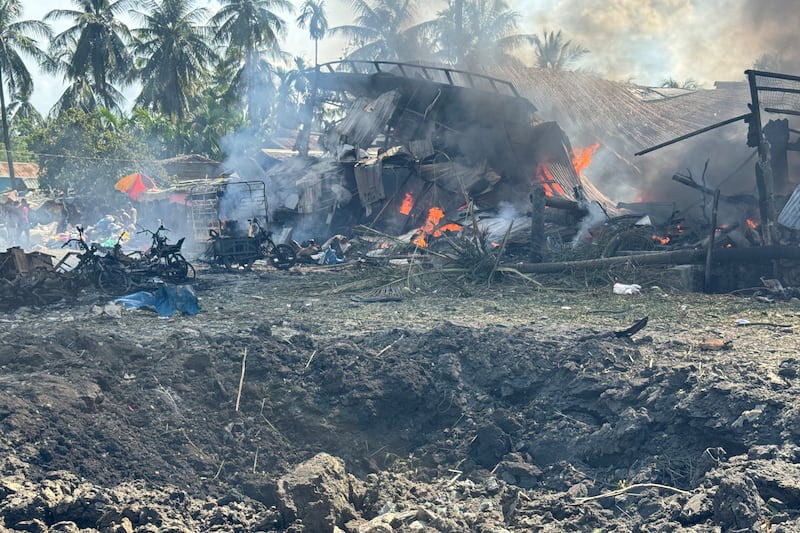
The AA reported that over a five-month period from April 21 to to September 30 the military government extended an invitation for peace talks while simultaneously killing more than 130 civilians in AA-controlled areas in airstrikes and heavy artillery attacks.
But no faction wants to accept a peace invitation while under constant attack, Zaw Wai Soe, a minister in Myanmar’s shadow National Unity Government, made up democratically elected leaders who were ousted in the coup, told RFA.
“The bombing didn’t just start now. They’ve been doing it all along. It has gotten worse in recent days,” he said. “They drop bombs despite knowing civilians are present. So who would want to meet them? It’s not just the AA, any group would feel the same way.”
Current battlegrounds
Since early this month, the AA has engaged in fierce clashes around military-controlled Sittwe, Kyaukpyu, and Manaung townships. Meanwhile, military government forces are advancing into Rakhine from Chin State, and the Magway and the Ayeyarwady regions. Residents report that airstrikes continue in AA-controlled territories.
Direct military confrontation will continue as long as armed combat persists on the ground, Thien Tun Oo, executive director of the Thayninga Institute for Strategic Studies, a pro-military think tank in Naypyidaw, told RFA.
“We will hold discussions for peace. However, for those who continue to rely on military means on the ground, they will naturally face head-on military confrontations,” he said. “Those relying heavily on military force will encounter military responses.”
RFA attempted to contact Brig. Gen. San Nyo Win, military spokesperson for Rakhine state, for comment on the situation, but phone calls went unanswered.
The airstrikes make it more difficult for the AA to accept an invitation to peace talks, Thar Tun Hla, chairman of the Arakan National Party, which represents the interests of Rakhine nationalists, told RFA.
“The peace process requires trust,” he said. “Firing on civilian targets cannot be viewed as a trust-building process.”
Translated by Kyaw Min Htun. Edited by Eugene Whong.