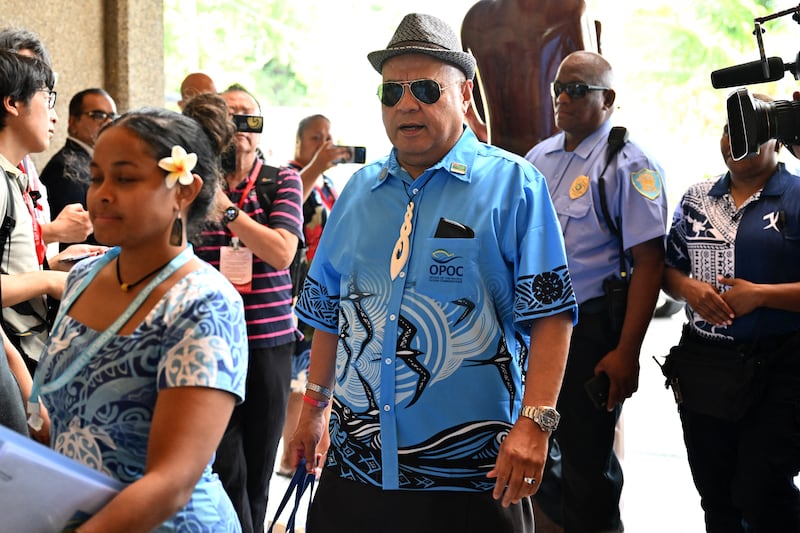
The 2026 Pacific Islands Forum Leaders Meeting will be “less productive” than in previous years because one third of the regional grouping’s leaders are not present for the summit in Palau, where China-Taiwan tensions are front and center, experts told Radio Free Asia.
Leaders from five of the 18 member nations — Fiji, Vanuatu, Samoa, Kiribati, and New Caledonia — sent deputy ministers or other senior officials in their stead. A sixth leader, Solomon Islands Prime Minister Matthew Wale, had arrived in Palau, but returned to Honiara to address a no-confidence filing against his leadership.
“The meeting is already less productive because as a political meeting, without leaders, it cannot be viewed as being productive,” Alan Tidwell, director of the Center for Australian, New Zealand and Pacific Studies at Georgetown University in Washington, told RFA. “Being productive means having leaders in the room.”
The theme of this year’s forum meeting uses the Palauan word for Palau as an acronym – B.E.L.A.U., Building Economies: Life. Action. Unity.
But the invitation of Taiwan as a development partner, and China as a dialogue partner, has left the countries of the Pacific Islands Forum, or PIF, anything but unified.
China-Taiwan rivalry
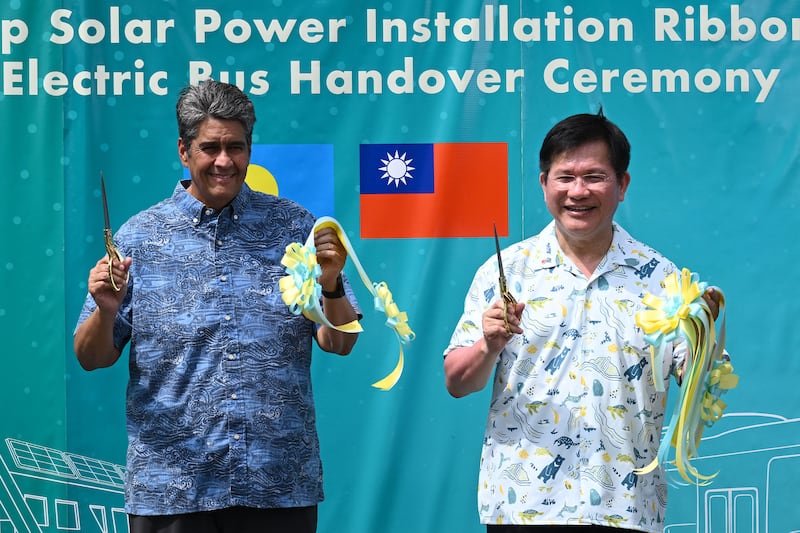
Palau is one of three Pacific countries and one of 12 globally that maintain official diplomatic relations with Taiwan. As host nation, Palau took the traditional role of inviting the non-member countries to the forum meeting alongside the PIF Secretariat, which determined that Taipei was eligible to participate as a development partner under the 1992 PIF framework.
Palau’s President Surangel Whipps Jr.’s decision to include democratic Taiwan, which mainland communist China considers to be a rogue province, angered Beijing.
After Taiwan’s Minister of Foreign Affairs Lin Chia-lung attended the PIF meeting’s opening ceremony on Monday, Qian Bo, China’s Pacific envoy, warned that there would be consequences, without specifying what the consequences were.
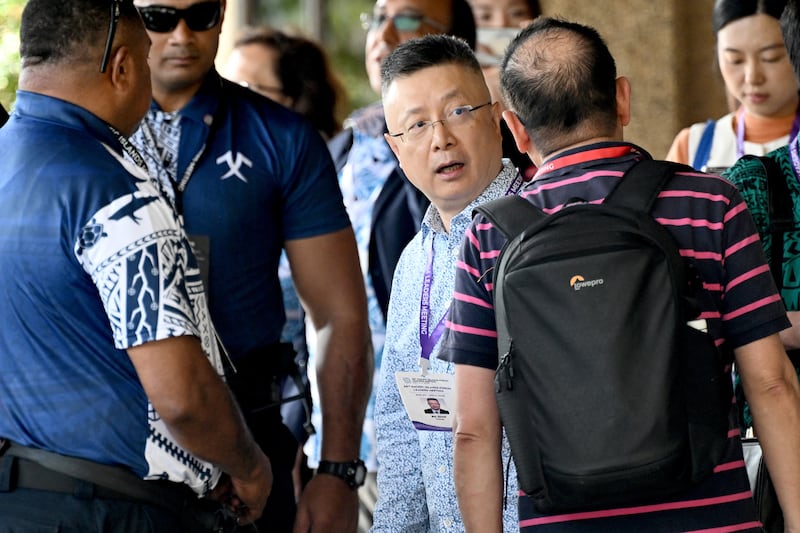
Though Qian said this was not a threat, Gregory Brown, Director of The Alliance Futures Initiative, a Washington-based think tank, said it was “a precisely calibrated threat in Pacific diplomacy.”
“It likely means tourism bans, frozen loans, and delayed projects for anyone who sat in the same room as Taiwan’s foreign minister,” he said, adding that Palau was the most likely target for retaliation.
He said China could put economic pressures on Palau, noting that Beijing devastated Palau’s tourism industry in 2017 by declaring it unsafe for Chinese tourists. Prior to then, around 40% of Palau’s tourism income came from China.
China warned its citizens not to travel to Palau in an advisory on Aug. 19, about 10 days before the forum, a move that was criticized by the United States Embassy in Koror as weaponization of tourism. Qian defended Beijing’s advisory to reporters on Monday.
“That weapon is still loaded,” Brown said, referring to the advisory. “We may already be seeing the first consequence play out.”
AFP reported that Chinese officials warned the delegations of the PIF countries that they should not attend any side events at the meeting that include Taiwan, citing a Pacific source at the meeting on condition of anonymity.
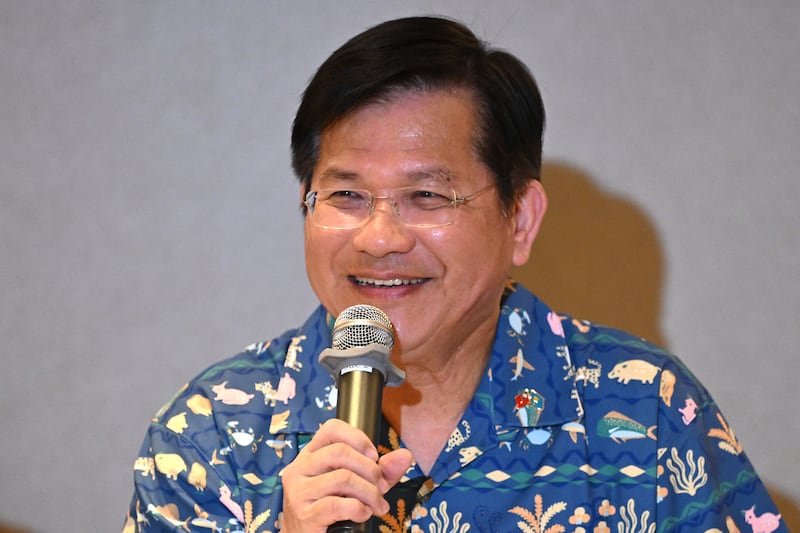
Lin defended Taiwan’s participation Tuesday, telling reporters that Taipei has been a significant donor to the Pacific, and has been involved with the meeting for decades.
“We should not make compromises just because of China’s recent bullying,” Lin said. “Wherever there is Taiwan’s presence, China will have a difficult time having full control over the area.”
But Beijing on Tuesday doubled down on its assertion that Taiwan does not belong.
Taiwan “is not qualified to participate in the forum’s activities in any capacity,” Guo Jiakun, a spokesperson for the Chinese foreign ministry told reporters in Beijing. “Authorities in Taiwan have sent independence separatists such as Lin Chia-lung to make sneaky visits and curry favour everywhere in a futile attempt to attract attention.”
One-third of leaders absent
While four of the five leaders who did not fly to Palau cited pressing domestic issues as the reason they could not attend, the fifth, President Taneiti Maamau of Kiribati said he was unable to attend because the country’s parliament was in session and a lack of available commercial flights.
In his stead, David Teaabo, the country’s former ambassador to China, was sent to lead the delegation. The move was widely interpreted as a snub aimed at both Palau and Taiwan.
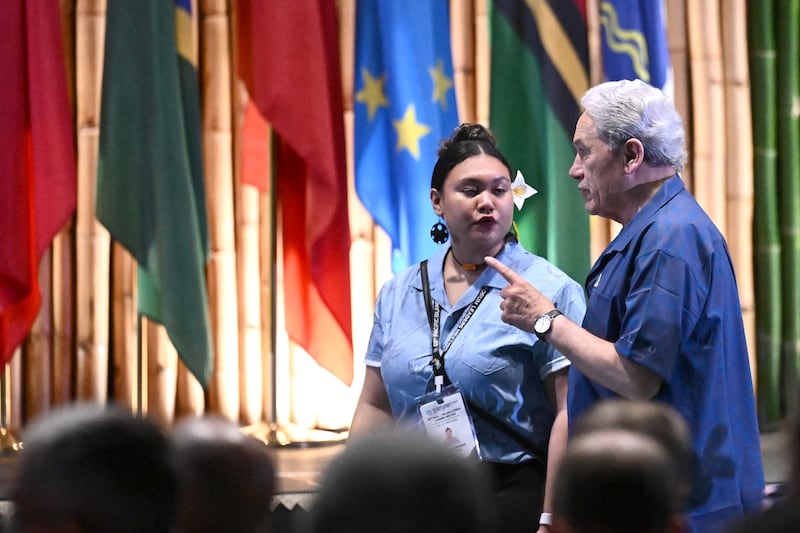
New Zealand’s Foreign Minister Winston Peters told reporters that denying that foreign influence had a role in the absences would “defy gravity and logic,” telling Australia’s ABC News that the absences were “highly suspicious.”
Tidwell called the Kiribati flights excuse “absurd,” and said that the absence of so many of the forum member countries’ leaders undermines the PIF meeting.
“It will be remembered as the meeting at which almost a third of the leadership didn’t attend,” he said. “From Washington’s perspective the deputy secretary of state is attending. This has been touted in Washington as a strong signal of how important the Pacific is for Washington.”
Tidwell explained that in previous years it would have been the Secretary of Interior that attends and that Deputy Secretary of State Christopher Landau’s participation was supposed to be “a success.”
“But who is he meeting with?” said Tidwell. “The real test will be to see how he’s met when he visits Tarawa.”
Kiribati is a scheduled stop on Landau’s three-country itinerary in the Pacific after the PIF meeting concludes Friday. According to the U.S. State Department, he will attend the Kiribati Development Partners Forum there, as well as having meetings with government representatives.
In last year’s forum held in the Solomon Islands, then Prime Minister Jeremiah Manele, widely considered to be a pro-Chinese politician, decided not to involve any outside nations, and this was seen as a way to prevent Taiwan from attending.
Brown praised Palau for its strategy of inclusivity.
“Last year, the Solomons solved the Taiwan problem by locking the door on everybody,” he said. “This year, Palau solved it by opening the door to everybody and telling China to behave like a guest instead of a landlord.”
He said President Whipps’ approach was better than Manele’s.
“In my opinion, Whipps’ approach is the right one,” he said. “It considers Pacific sovereignty as something Pacific states exercise by making their own decisions about who sits at the table.”
Edited by Charlie Dharapak.