
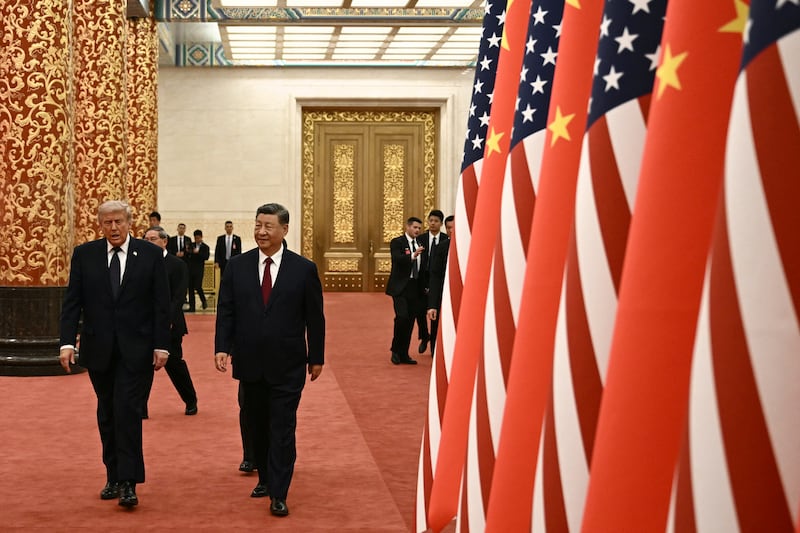
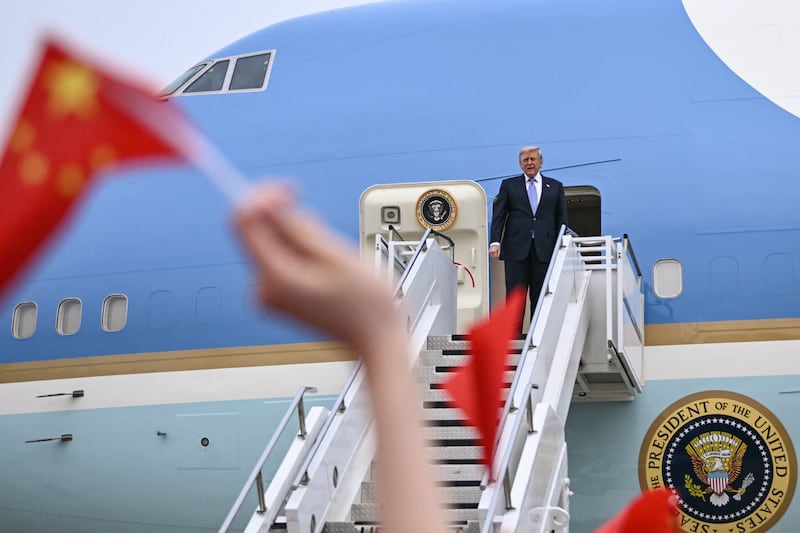
Chinese President Xi Jinping used his meeting with U.S. President Donald Trump last week to reiterate that Taiwan remains the most sensitive issue in U.S.-China relations, and analysts told Radio Free Asia that the Taiwan issue will be front and center according to Beijing’s latest Five-Year plan.
During talks in Beijing, Xi warned Trump that mishandling the Taiwan issue could lead to “clashes and even conflicts” and urged Washington to “exercise extra caution” over arms sales to Taiwan, according to Chinese state media and media reports following the summit.
Xi’s statements, combined with concepts outlined in China’s 15th Five-Year Plan, released in March, suggest Beijing increasingly sees Taiwan and the South China Sea as part of a connected strategic theater tied to regional security, maritime control and long-term competition with Washington, the analysts said.
Mainland communist China considers democratic Taiwan to be a rogue province and Beijing appears to be entering “a phase of taking more concrete steps to accelerate the push for reunification,” William Yang, a Northeast Asia analyst at the Belgium-based International Crisis Group think tank, told RFA.
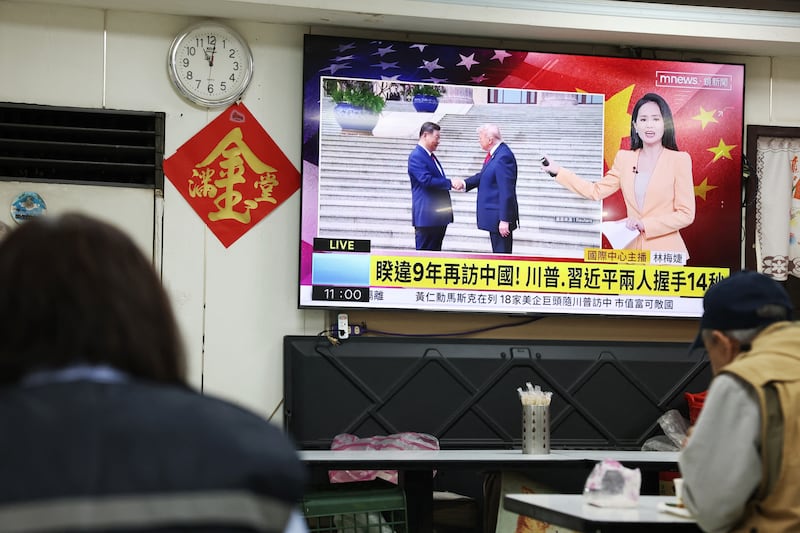
“While the Communist Party still mentioned peaceful development across the Taiwan Strait, they have connected the mission of ‘reunification’ to the goal of achieving national modernization, suggesting that Beijing wants to start making more concrete progress on the issue of unification with Taiwan,” he said, talking about the content of the Five-Year Plan.
Maritime strategy
The plan reflects a leadership increasingly concerned about “uncertainty and instability” in the global environment while seeking to strengthen Beijing’s position around Taiwan and the South China Sea, according to a new report by the U.S.-based think tank Foreign Policy Research Institute, or FPRI.
The report described growing Chinese efforts to strengthen control over nearby maritime areas, including renewed island-building activity at Antelope Reef in the South China Sea.
Yang said Beijing increasingly viewed Taiwan and the South China Sea through the same strategic lens.
“China certainly views the Taiwan and South China Sea theater as closely connected, so its strategic planning and preparation around Taiwan and the South China Sea should also be viewed as highly relevant,” Yang said. “Beijing’s activities around Taiwan and the South China Sea should be viewed as part of its larger efforts to strengthen its posture and expand its presence and control across the critical sea lanes and maritime choke points.”
He added that Washington’s own assessment of China’s intentions was evolving.
“The longstanding, dominant narrative in Washington regarding China’s calculation and plan for Taiwan and the South China Sea has always been that Beijing is seeking to assert its dominance over Taiwan and the South China Sea to achieve its hegemonic ambition in the Indo-Pacific region,” Yang said. “However, the U.S. intelligence service already came out to overthrow that assessment earlier this year by arguing that they don’t think China would be looking to invade Taiwan by 2027.”


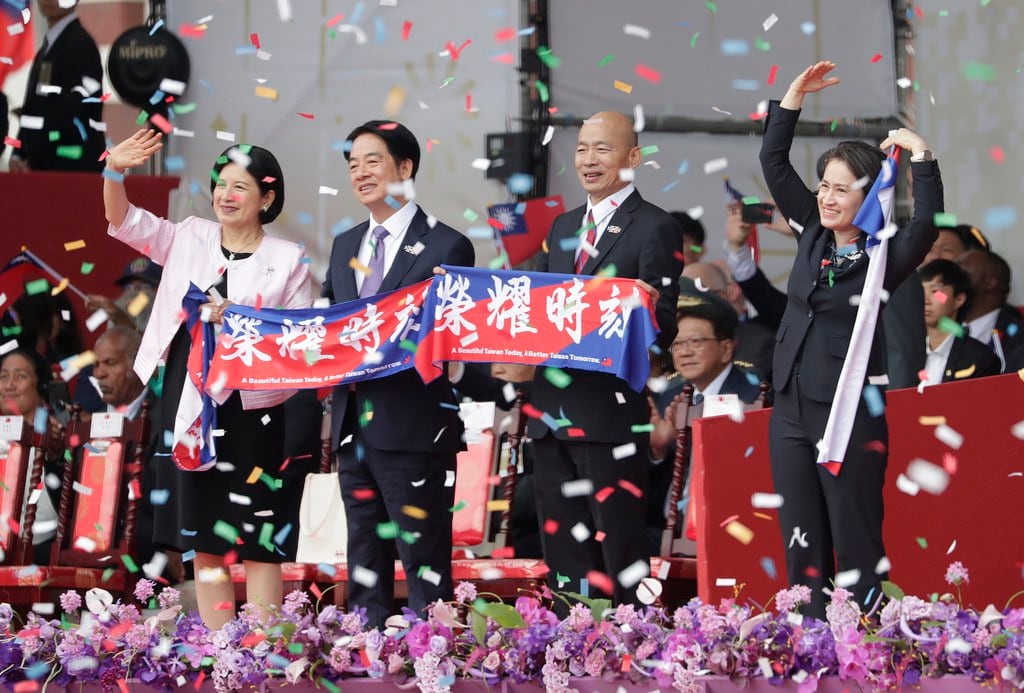
Speaking after meeting Xi, Trump said the two sides had “talked a lot about Taiwan” but said he had made no commitments to Beijing. He also declined to say whether the United States would defend Taiwan in the event of a Chinese attack.
Trump further described a pending U.S. arms package for Taiwan as “a very good negotiating chip,” prompting concern in Taiwan over whether Washington’s support could become tied to broader negotiations with Beijing.
Taiwan’s President Lai Ching-te later defended U.S. arms purchases as “the most important deterrent” against regional instability, while Taiwan officials stressed there had been no change in longstanding U.S. policy toward the island.
Strategy of strength
Rather than signaling a dramatic strategic shift, the Five-Year Plan represents a more systematic effort to strengthen China’s position over time, Sylwia M. Gorska, a Ph.D candidate in international relations at the University of Lancashire in the United Kingdom, told RFA.
“The underlying priorities remain largely consistent: securing China’s maritime periphery, reducing vulnerability to external pressure, and limiting the ability of the United States and its allies to constrain Chinese influence close to the mainland,” Gorska said.
She said Beijing increasingly appeared focused on “steadily strengthening its position across contested waters” through coast guard operations, maritime militia activity and persistent military pressure below the threshold of open conflict.
“There does appear to be a closer linkage emerging between Beijing’s Taiwan strategy and its posture in the South China Sea,” Gorska said, noting that the trend was visible in Beijing’s confrontations with the Philippines around Second Thomas Shoal in the disputed Spratly Islands chain, as well as in the growing Chinese naval and air activity around Taiwan.
“The issue is not only territorial control, but also the creation of conditions that could complicate external military responses during a future regional crisis.”
The FPRI report also argued that Beijing’s growing emphasis on instability and “security” suggested the Chinese Communist Party increasingly saw strategic opportunity in a distracted United States and a fragmented international environment.
It said China was likely to continue promoting its “Community of Common Destiny” vision and broader governance initiatives through multilateral institutions including the United Nations.
Gorska cautioned against viewing China’s strategic moves as preparing for an inevitable conflict.
“Beijing still appears more focused on expanding its leverage, constraining U.S. freedom of maneuver, and improving its long-term position than on triggering a near-term war,” Gorska said.
Edited by Eugene Whong.