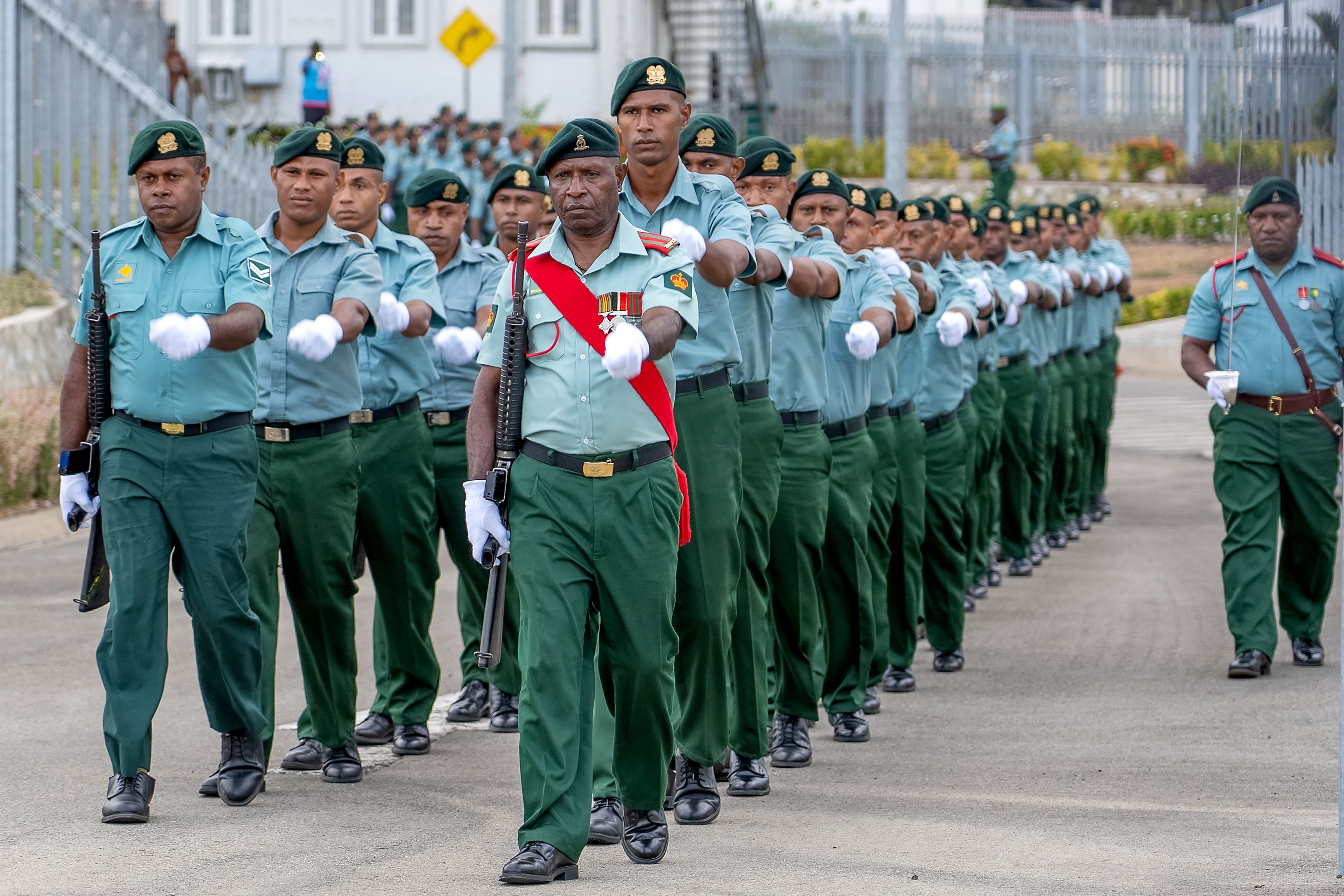
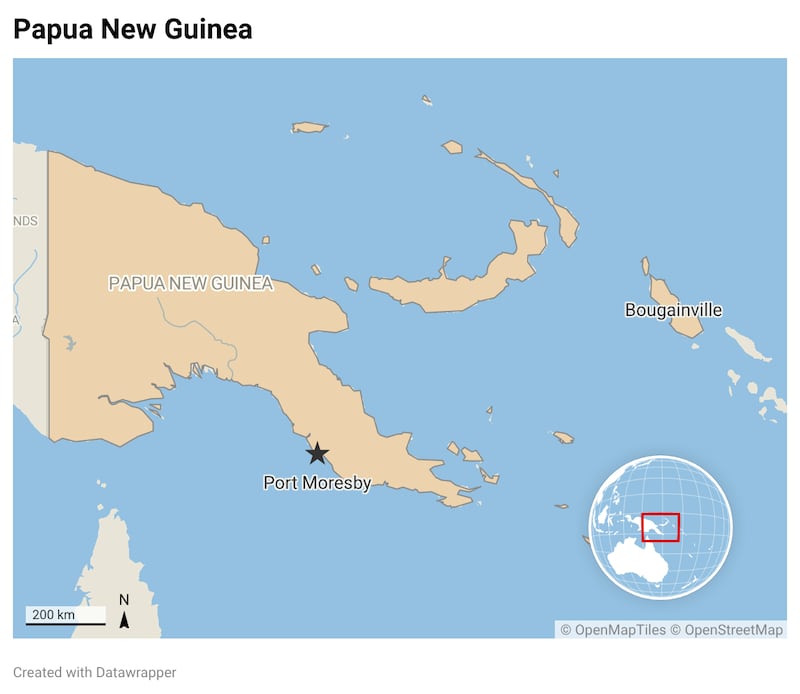
PORT MORESBY, Papua New Guinea – As Papua New Guinea’s Parliament prepares to deliberate on granting independence to the autonomous region of Bougainville, experts told Radio Free Asia that the decision could alter the geopolitical landscape, where China and Western powers compete for diplomatic influence.
Bougainville gained autonomous status in 2005, giving it its own constitution, elected president and parliament, as well as broad powers over local governance, natural resources and public services.
In a landmark referendum held in 2019, voters in the autonomous region overwhelmingly backed independence from Papua New Guinea, or PNG. The vote was part of a peace agreement that ended a decade-long separatist conflict, but its outcome was nonbinding and requires a final decision by PNG’s Parliament.
PNG’s Parliament is expected to resume deliberations during its November budget session on whether to ratify the referendum result, a decision that could pave the way for Bougainville to become one of the world’s newest sovereign states, but Wally Hiambhon, a journalist-turned-media consultant in PNG, told RFA that the emergence of more small Pacific states could create new vulnerabilities amid growing competition between major powers.
“A fragmented Pacific with too many small states presents the potential for instability and conflict in an environment where there exists super-power rivalry and influence,” said Hiambhon. “We should tread with caution and responsibility on this one.”
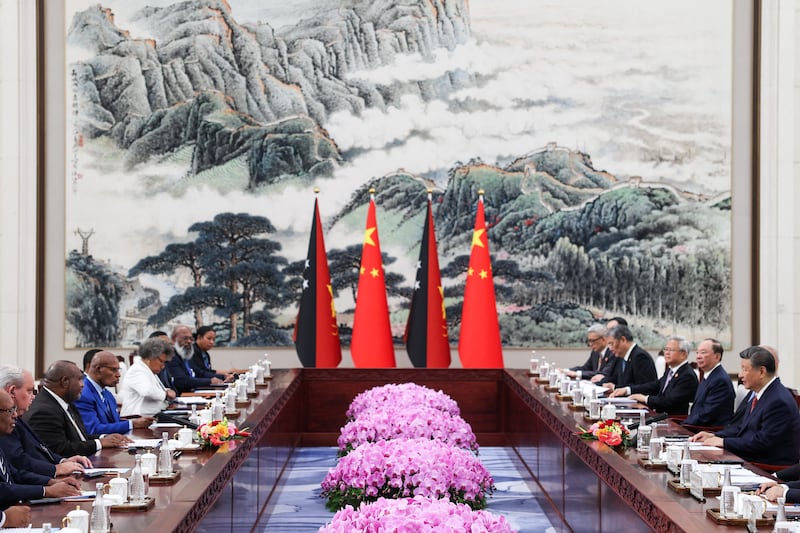
Port Moresby’s recent warming relationship with Beijing is concerning, James Tanis, a former Bougainville president who participated in the peace negotiations, told RFA.
He took particular issue with the shutdown of Taiwan’s representative office in Port Moresby in November, and said that under its current status, Bougainville has no control over its own foreign relations.
“Only independence will help Bougainville to choose its own international friends,” he said.
An independent Bougainville would be able to pursue its own diplomatic relationships, although international recognition and admission to the United Nations would present additional challenges.
The people have spoken
For Margaret Edoni, a self-employed mother in PNG, the question of whether Bougainville should become an independent country has a straightforward answer: the people have already made their choice.
“Yes, I think PNG should give independence to Bougainville,” she told RFA. “In the 2019 referendum, 97.7% of Bougainvilleans voted for independence. And as a democratic state, PNG must respect the Bougainville people’s choice.”
Others in PNG have also voiced support for independence, arguing that the overwhelming vote leaves the national government with little justification for rejecting it. Some have criticized Port Moresby’s handling of the process, accusing it of poor planning and indecisiveness.
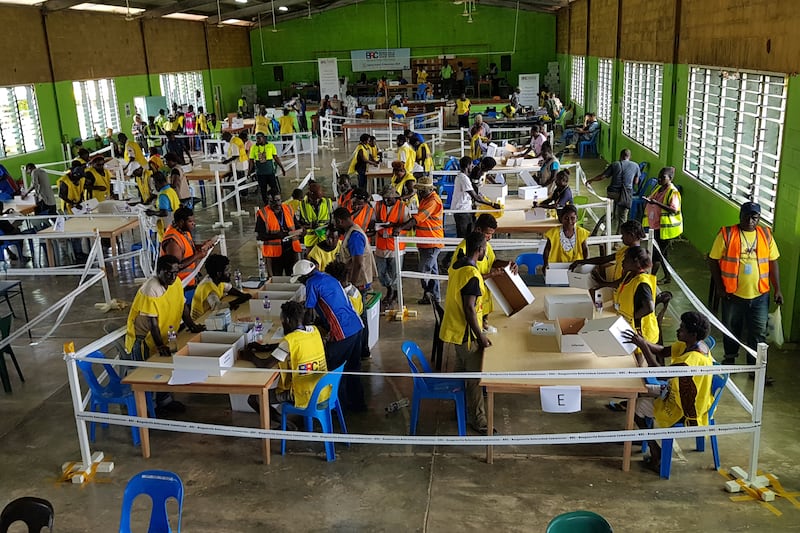
The current debate began in October after the government formally presented the referendum result and two supporting documents to Parliament in August. Prime Minister James Marape said lawmakers would return to the matter in November before a vote.
Under a parliamentary procedure adopted in June, ratification requires an absolute three-quarters majority, or 89 votes in the 118-member Parliament.
A troubled history
Bougainville, an island region east of mainland PNG and geographically close to the Solomon Islands, has a long history of separatist aspirations.
The dispute intensified in the late 1980s over the Panguna copper and gold mine, once among the world’s largest, as grievances over environmental destruction and the distribution of mining revenues fueled an armed rebellion.
The conflict between separatists and PNG security forces, compounded by internal fighting, killed thousands of people and devastated infrastructure before a peace process brought the fighting to an end.
The 2001 Bougainville Peace Agreement provided for regional autonomy, weapons disposal and an eventual referendum on independence.
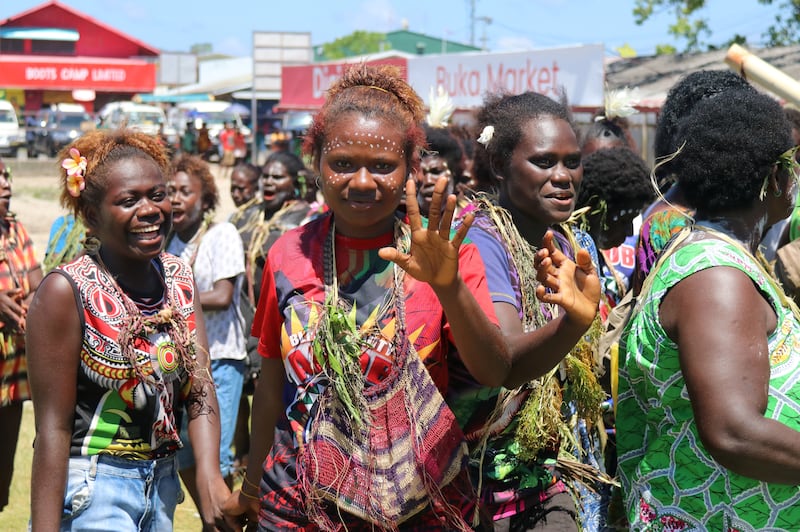
Nearly 25 years later, the region is approaching a decisive stage in implementing that agreement.
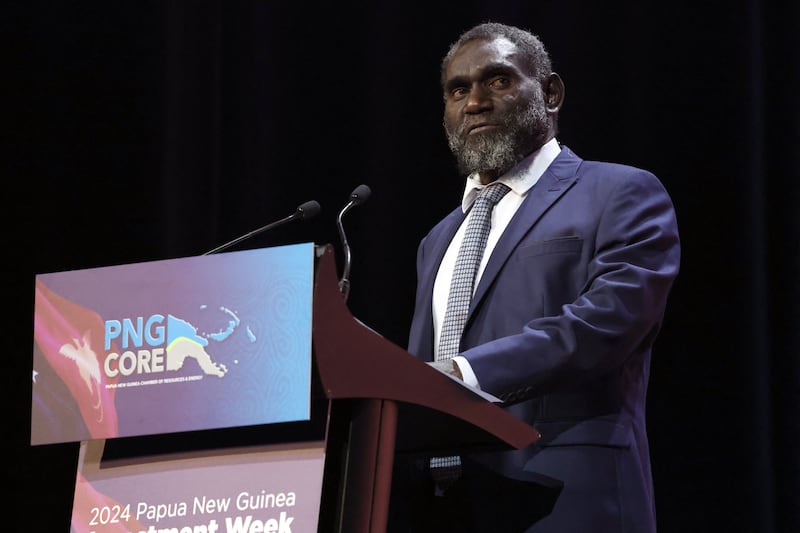
Bougainville President Ishmael Toroama said on Nov. 13 that his government had fulfilled its obligations under the peace process and expected PNG to demonstrate the same commitment.
Bougainville’s leadership has proposed a transition to self-government by September 2027, followed by full independence in 2030.
But approval from Port Moresby remains uncertain.
Marape has emphasized that Parliament must consider both Bougainville’s aspirations and the implications for PNG’s national unity. His government has proposed a negotiated transition of up to 15 years if lawmakers endorse independence, potentially subject to economic and security conditions.
What if Parliament says no?
Tanis warned that rejecting independence could jeopardize decades of efforts to establish lasting peace.
“It is better to simply endorse and complete the process rather than not endorse and throw the process into the unknown,” he told RFA.
Tanis argued that the responsibility for securing the necessary parliamentary majority rested with Marape’s ruling Pangu Party and its coalition partners.
He also questioned what would follow a rejection, saying the agreements governing the peace process did not establish a clear pathway for implementing a negative vote.
Under the parliamentary procedure, a failed ratification vote would leave Bougainville’s existing autonomy arrangements in place, although the two governments could continue consultations.
Marape has suggested that a negative vote need not permanently settle the issue, leaving open the possibility of further negotiations.
But for supporters of independence, another delay could deepen frustration after years of waiting.
Mary Soondrawu, chairperson of PNG Trust Inc., an educational and advocacy organization, said the national government should respect the referendum outcome.
“The people have spoken and let their voice be heard,” she told RFA.
Can Bougainville survive alone?
Even if Parliament endorses independence, the region faces substantial economic challenges.
Bougainville relies heavily on financial transfers from PNG’s national government, raising questions about its ability to fund public services and maintain essential infrastructure as a sovereign country.
According to the Autonomous Bougainville Government, Bougainville’s budget for 2026 assumed an internal revenue of 46.74 million kina (US$10.2 million), or just 5.5% of its annual budget.
Marape has proposed that Bougainville demonstrate sufficient internal revenue to support at least 70% of its budget as part of a negotiated transition.
Mining could provide a potential source of revenue, although the legacy of Panguna remains contentious.
On Nov. 16, global mining group Rio Tinto announced a commitment of US$250 million over several years to a fund addressing environmental and human rights impacts associated with the former mine.
PNG Trust Inc.’s Soondrawu said independence should allow Bougainville to pursue accountability for environmental damage and make its own economic decisions.
Hiambhon warned that the economic realities of independence could prove more difficult than its supporters anticipate.
“My view is that whilst the majority of Bougainvilleans want independence, the reality of self-rule might be tougher than they reckon, particularly economic wellbeing,” he told RFA.
Edited by Taejun Kang and Eugene Whong.