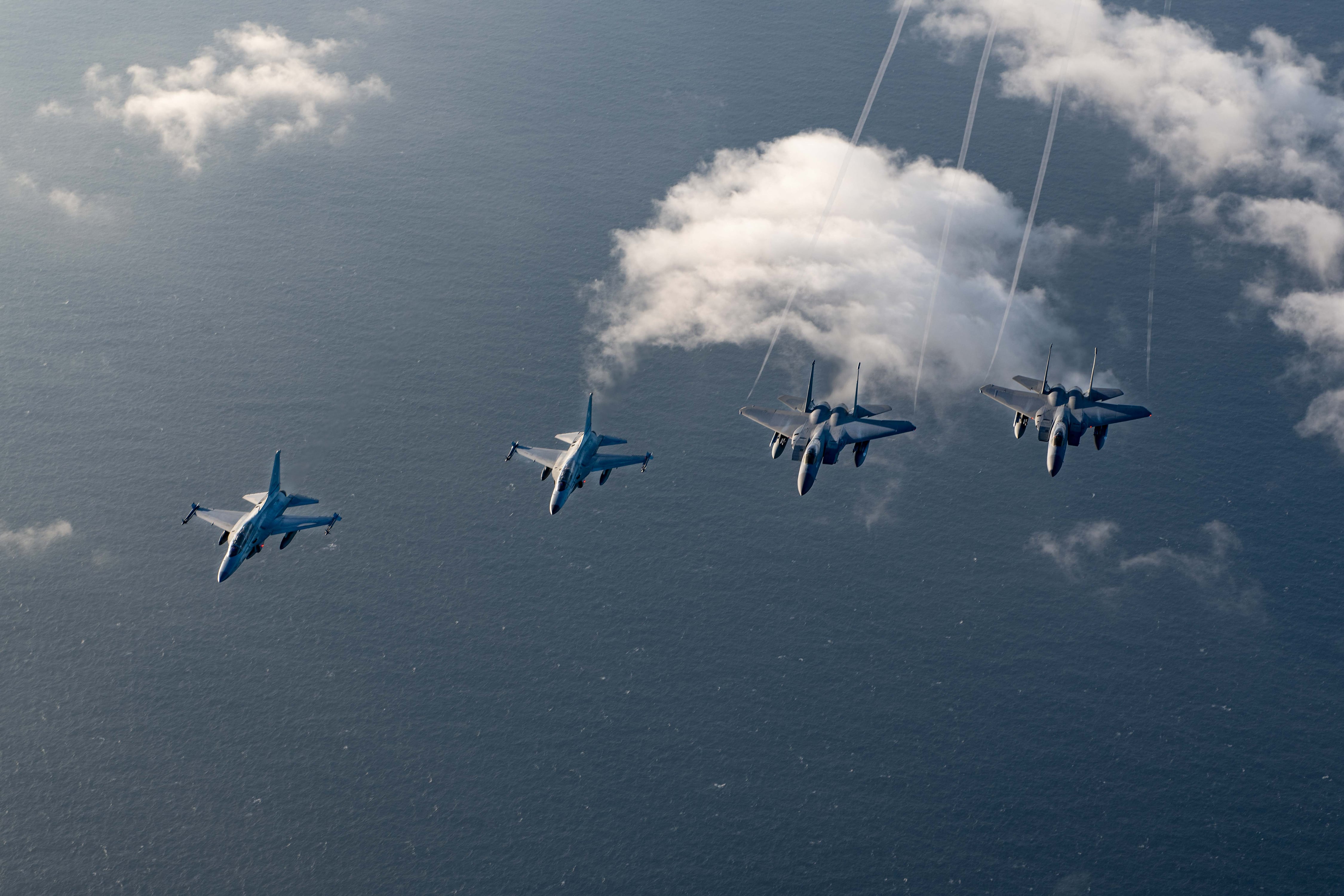
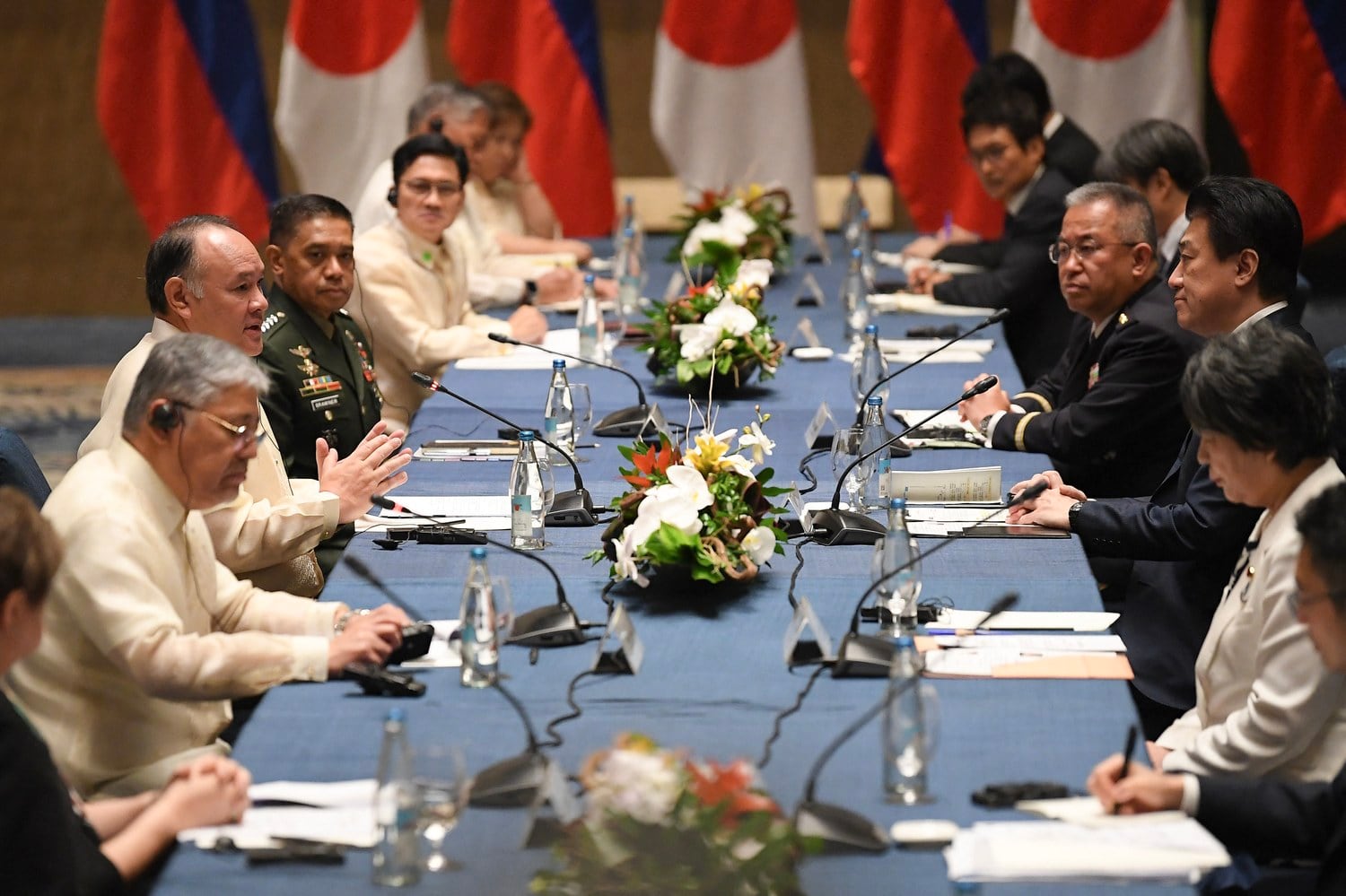
China’s sanctions on a senior Philippine official – and statements that classify him as an apologist for Japan’s wartime aggression – are attempts to drum up historical fears as Manila and Tokyo deepen security ties, analysts told Radio Free Asia.
The sanctions on the Philippines’ Defense Secretary Gilberto Teodoro Jr. came last month, when China’s Foreign Ministry accused him of repeatedly making “irresponsible remarks” about China, damaging Chinese interests and undermining bilateral relations, all for comments critical of China’s claims in the sea and aggressive activity there.
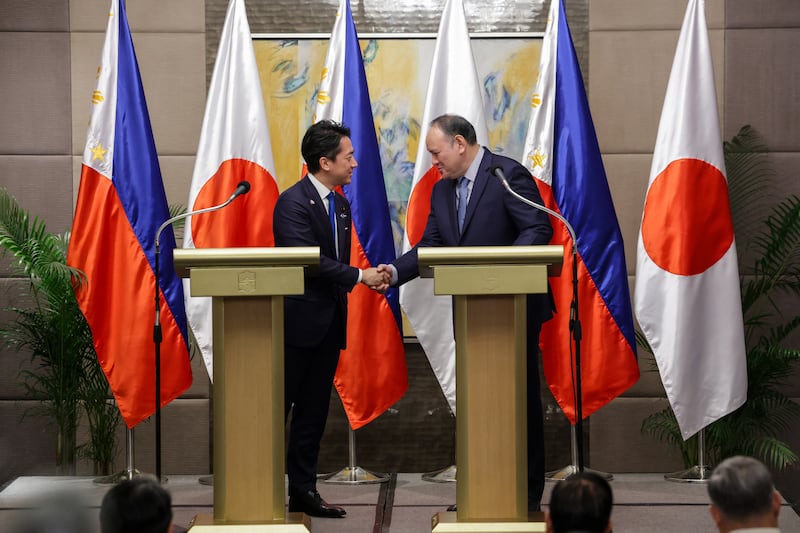
The impact of the sanctions – which forbid Teodoro and his family from entering China and prevent any individuals or organizations from doing business with them – appears limited. Teodoro has indicated he has no intention of traveling to China, raising questions about what Beijing hopes to achieve.
But the analysts say that Beijing’s campaign against Teodoro attempts to use the memory of World War II to cast Japan as an aggressor in the Pacific in the modern day – in order to distract from the illegality of Beijing’s claims over the entirety of the South China Sea.
“A purely South China Sea argument is difficult terrain for China,” Aniello Iannone, a lecturer in Indonesian and Southeast Asian politics at Diponegoro University in Indonesia, told RFA.
Iannone explained that Manila’s claim to its own exclusive economic zone has legal bases under the United Nations Convention on the Law of the Sea, or UNCLOS, a 2016 decision at the Permanent Court of Arbitration that said China’s claim to the whole sea was invalid, and several other legal mechanisms.
“Bringing Japan into the picture changes the terms of the dispute,” he said. “It shifts attention away from Chinese conduct at sea and towards a broader political question: what kind of security order are Manila, Tokyo and Washington building in the region?”
The case against Teodoro
Zhang Junshe of the People’s Liberation Army Naval Military Academic Research Institute offered an unusually detailed case against Teodoro in comments to nationalist-leaning Chinese news and commentary site Guancha.
Zhang accused Teodoro not only of “manipulating” and “internationalizing” the South China Sea dispute, but of hyping the “China threat” while “whitewashing Japan’s new militarism,” referring to recent policy shifts in Tokyo that have led to increases in military spending, more active roles in cooperating with allies to counter regional threats, and significant debates over potential changes to pacifist clauses in Japan’s constitution.
Zhang juxtaposed these shifts against Japan’s occupation of the Philippines during World War II, going as far as describing Teodoro’s position as “recognizing a thief as one’s father.”
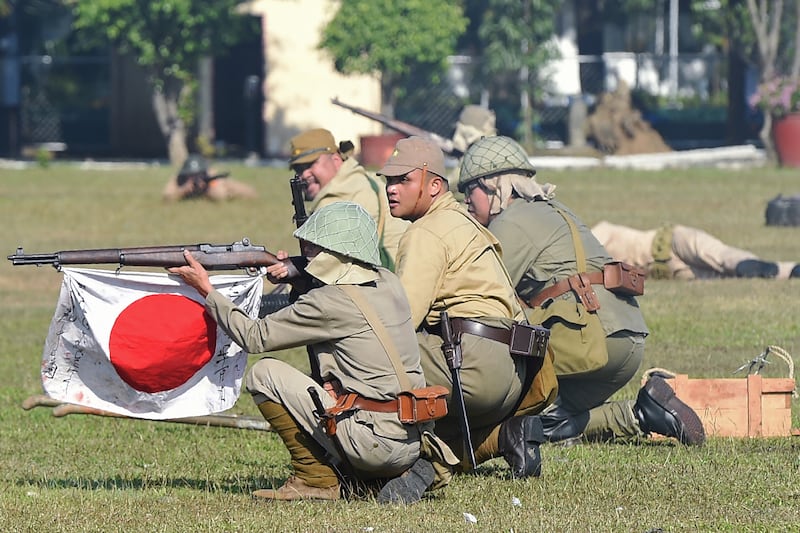
The Philippines endured a brutal Japanese occupation between 1942 and 1945, a history Beijing regularly invokes in its criticism of Tokyo’s expanding security role.
Zhang said Japan was using the Philippines as a “springboard” and “stepping stone” to loosen the constraints of the constitution, expand overseas military deployments and increase its regional military influence.
History as a weapon
Iannone said China’s use of Japan’s history in the Teodoro case should be understood as political rather than simply commemorative.
“Beijing is not just asking Filipinos to remember the Japanese occupation,” he said. “It is using that history to question the legitimacy of Japan’s return as a security actor in Southeast Asia.”
Iannone said that China is alarmed by the Philippines’ willingness to work closely with Japan on security matters.
“The underlying suggestion is that Japan’s military normalization is not historically neutral, and that Manila is helping rehabilitate a former aggressor by deepening security cooperation with Tokyo.”
As part of their closer cooperation, Manila and Tokyo are not only agreeing to cooperate in strategic areas of the South China Sea, they are moving towards talks on the boundaries of their respective EEZs in waters where Taiwan has overlapping claims, Iannone said.
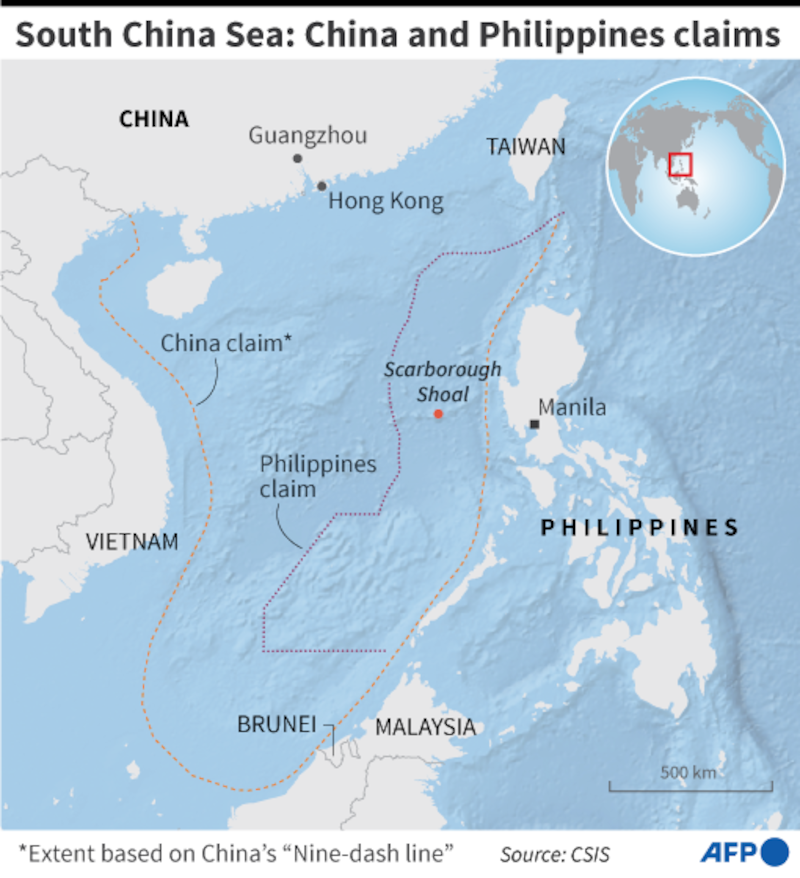
China considers Taiwan as a rogue province, but an integral part of its own territory, so negotiations on boundaries between Japan and the Philippines in these waters without Chinese input would be seen as an affront to the legitimacy of Taiwan’s – and therefore China’s – claims.
“From Beijing’s perspective, these are not isolated developments,” Iannone said. “They can be read as parts of a strategic network linking the Philippines, Japan and the United States along China’s maritime periphery.”
That creates a complication for Manila, which has sought to defend its South China Sea claims through international law while maintaining its one-China policy and avoiding open involvement in a cross-strait confrontation.
“China has an interest in weakening that distinction,” Iannone said.
“Once Philippine cooperation with Japan is portrayed as part of a Taiwan-related security architecture, even ordinary maritime cooperation can be recast as participation in a wider containment strategy.”
A symbolic target
The Philippine government has strongly backed Teodoro in light of the sanctions on him – the Department of Foreign Affairs called the sanctions an “unfriendly act” that would further complicate bilateral relations, while the Philippine military described them as political intimidation and said Teodoro’s statements were grounded in international law.
Teodoro said he would continue carrying out his duties and defending the Philippines against what he called China’s “wickedness,” including at sea.
China has not specified which of Teodoro’s comments it considered irresponsible, Enrico Cau, a Taipei-based independent security researcher, told RFA. Teodoro’s position, however, has received “strong backing by the Philippines’ political and security establishment.”
The support suggests “at least a substantial share of the country’s political and security stakeholders, as well as a vast share of the population likely support such a position,” he said.
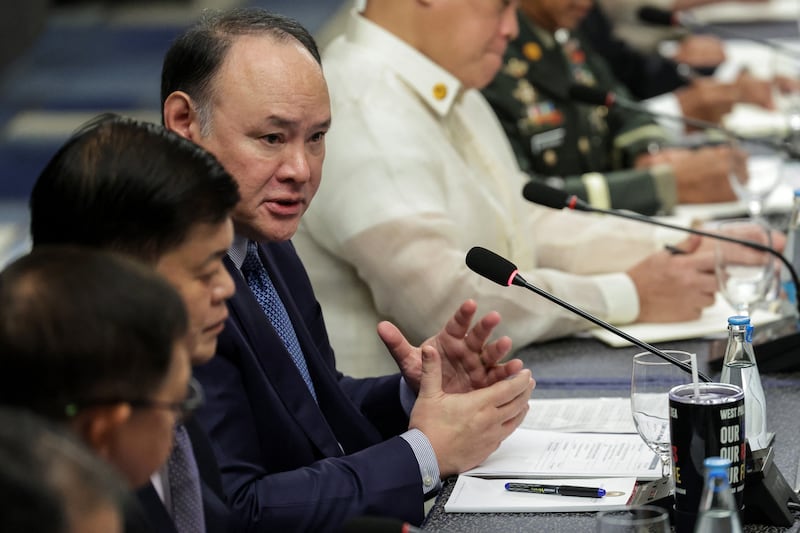
Iannone described the sanctions as “performative coercion” whose direct impact was limited but which sought to shape wider regional calculations.
“Teodoro is the immediate target, but the message is aimed at several audiences,” he said. “For Teodoro and the Philippine political class, the message is that China is prepared to personalize diplomatic conflict and impose costs on officials who speak bluntly about Chinese coercion or advocate closer security cooperation with Japan and the United States.”
Punishing Teodoro is therefore not the objective, Iannone said.
“The aim may not be to make Teodoro change his position,” he said. “It may be to make others think twice before adopting the same tone.”
Cau noted that China overusing sanctions to try to silence its critics – especially in ways that have limited effect – carries a risk of undermining the threat of future sanctions.
Iannone, meanwhile, said that the sanctions on Teodoro may in fact have the opposite of their intended effect.
“In the Philippines, where distrust of China is already substantial, the sanction can reinforce his image as someone prepared to defend Philippine sovereignty,” he said.
Edited by Eugene Whong.