Read a version of this story in Vietnamese.
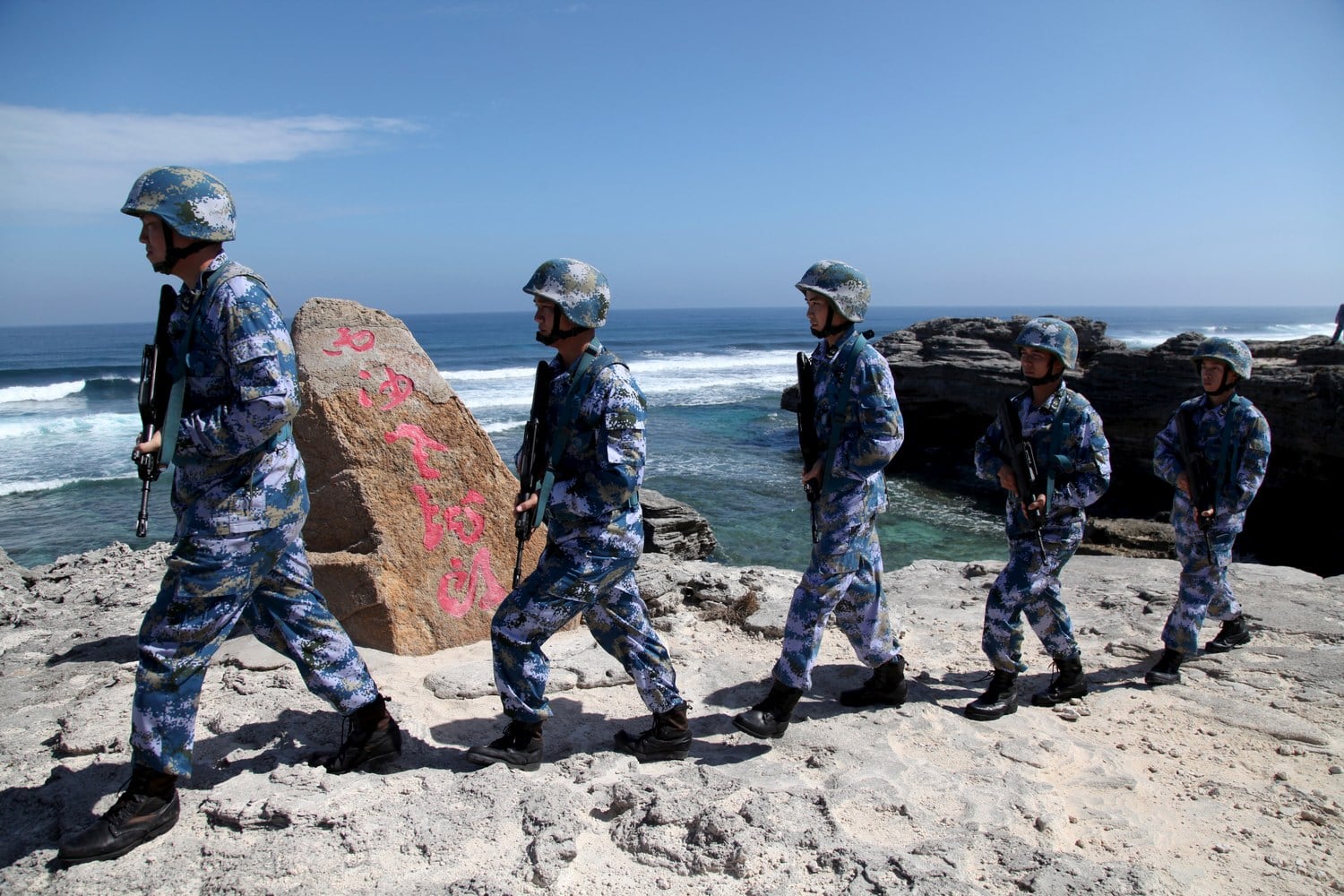
China’s “patriotic” tourist cruises to the disputed Paracel Islands in the South China Sea are a calculated move by Beijing to normalize its de facto control over the islands through soft power and collective memory, an expert from Vietnam – a country which also claims the Paracels – told Radio Free Asia.
The latest assertion of Chinese sovereignty comes at a time when Hanoi seeks to maintain stable ties with Beijing, without ceding ground on its own claims.
The revamped cruise program, launched in early October, features a theatrical production depicting generations of Chinese fishermen defending what Beijing considers its maritime territory, alongside other activities promoting national identity and territorial sovereignty.
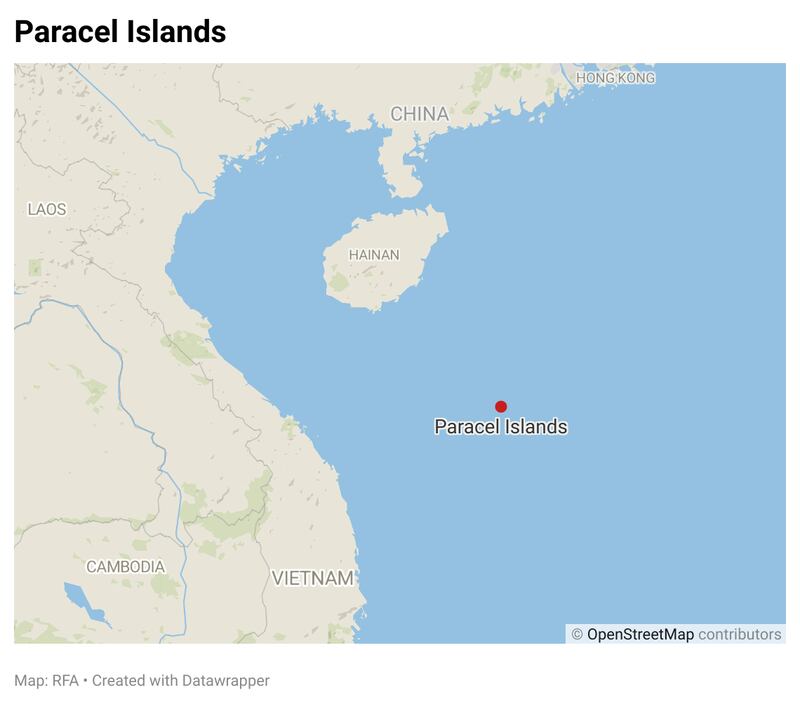
China has controlled the entire Paracel archipelago since 1974 – at the tail end of the Vietnam War – when it seized the remaining islands held by South Vietnam following a naval clash. Vietnam and Taiwan also claim the islands, which lie between the Vietnamese coast and China’s southern island province of Hainan.
Hanoi’s current pursuit of maritime cooperation with Beijing makes it difficult for Vietnam to protest China’s soft power moves, but doing nothing only helps Beijing, an expert from Vietnam told RFA Vietnamese on condition of anonymity for security reasons.
“If Hanoi simply maintains a calm posture to preserve diplomatic momentum without taking timely legal action in response to each incremental infringement, Beijing could easily exploit that silence to gradually lower the threshold for resistance across the region,” the expert said.
From sightseeing to sovereignty
China has operated tourist cruises to the Paracels since 2013, but the latest initiative places a greater emphasis on patriotic education, incorporating political messages into entertainment and recreational activities throughout the voyage.
Hainan Port and Shipping Holding Co., in cooperation with the Hainan Performing Arts Group, launched an upgraded service aboard the cruise ship Xianglong Dao on Oct. 3, according to a Xinhua Finance report republished by Sina Finance.
The four-day cruise departs from Sanya in Hainan province and travels to Tree Island, known in China as Zhaoshu Island, in the northern part of the Paracel archipelago.
Marketed under the slogan “One trip to Xisha, a lifetime of love for the motherland,” the program features three consecutive evenings of performances, including an original theatrical production titled “Defending the Ancestral Sea.”
The play depicts generations of fishermen from Tanmen, a fishing community in Hainan, making a living at sea and “protecting the blue frontier.” Other activities include performances of revolutionary songs and live dubbing of patriotic films – a type of performance art in China during which old films are played without their audio tracks and live actors voice all the spoken lines.
Upon arriving at Tree Island, passengers participate in Chinese flag-raising ceremonies, patriotic education sessions and beach cleanups.
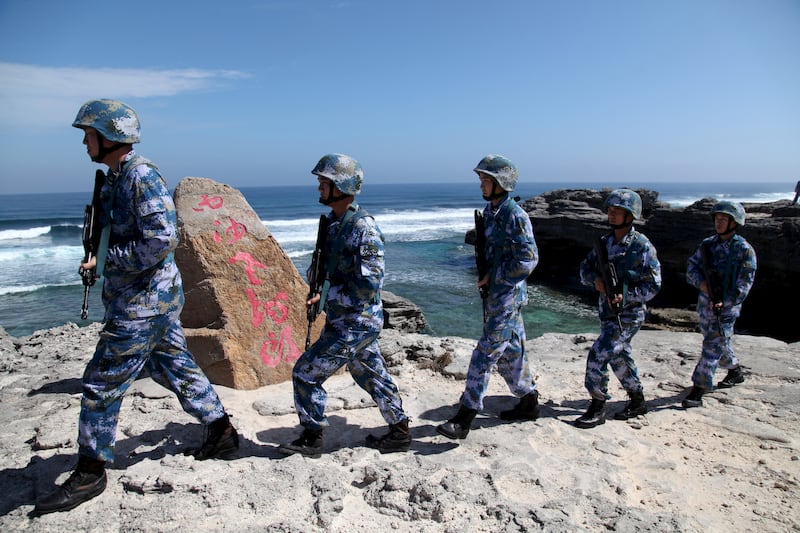
Xianglong Dao completed eight voyages in the first month of the revamped service, recording 2,516 attendances at its performances, according to figures released by the operator and published by Chinese news portal Sohu on Nov. 5.
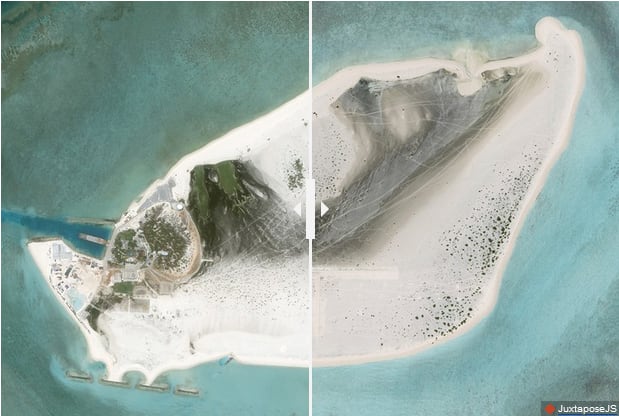
The tourism program complements Beijing’s broader efforts to consolidate its administrative and civilian presence in disputed waters. In 2012, China established Sansha, a city headquartered on Woody Island in the Paracels, to administer vast areas of the South China Sea it claims as its territory.
Maritime negotiations stall
During the ASEAN summit in Manila last week, Southeast Asian countries again failed to reach an agreement with China on rules governing conduct in the South China Sea, a strategically important waterway through which trillions of dollars in global trade pass annually.
China claims most of the sea, overlapping with maritime and territorial claims by Vietnam, the Philippines, Malaysia, Brunei and Taiwan.
In 2016, an international arbitral tribunal in The Hague ruled that China’s claims to historic rights over resources within its so-called nine-dash line had no legal basis. Beijing has rejected the ruling.
ASEAN and China have been working toward a code of conduct for years following the signing of a nonbinding declaration in 2002, and leading up to this year’s summit, the regional bloc had a goal of finalizing the code in 2026, but differences over the proposed agreement’s scope and enforceability have hampered progress.
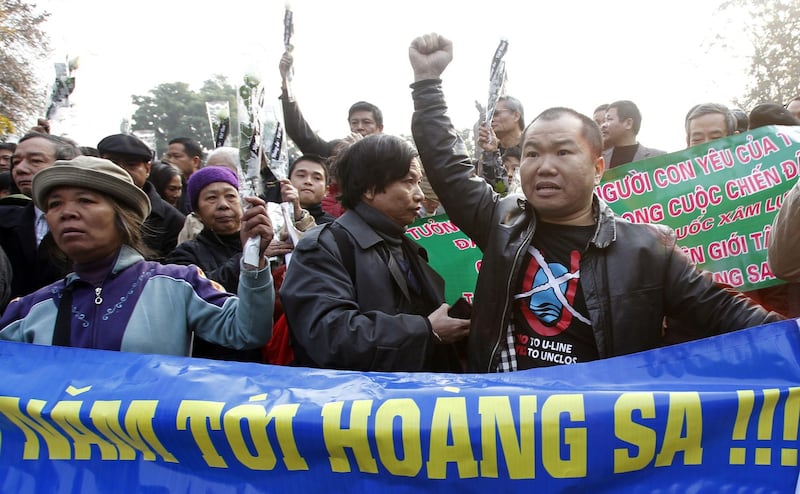
ASEAN Secretary-General Kao Kim Hourn said on Nov. 18 that more than 80% of the text of the code of conduct had been completed, with the remaining provisions expected to be negotiated in 2027.
Key issues, including whether the agreement would be legally binding and which geographical areas it would cover, remain unresolved.
Hanoi walks a diplomatic tightrope
Vietnam, which has long sought to balance its economic and political ties with China against its territorial disputes with Beijing, has continued to emphasize bilateral cooperation.
China is Vietnam’s largest trading partner, and the two countries maintain close ties between their ruling communist parties despite longstanding tensions over the South China Sea.
A review of public statements issued by Vietnam’s Foreign Ministry in October and November found no specific condemnation of the revamped cruise program.
Hanoi’s most recently identified statement on the Paracels was issued on Aug. 28, when it denounced Chinese construction activities at two maritime features in the archipelago as illegal.
Ahead of this month’s Asia-Pacific Economic Cooperation summit in Shenzhen, Vietnamese Communist Party General Secretary and President To Lam published an article titled “One ocean, one future” in the state-run China Daily, highlighting the importance of regional maritime cooperation.
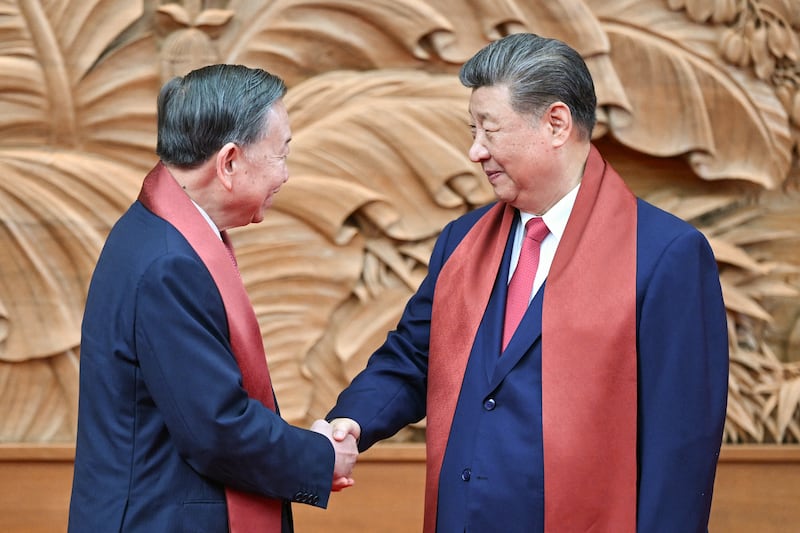
On Nov. 22, two Vietnamese coast guard vessels departed the northern port city of Hai Phong for a joint patrol with their Chinese counterparts along the maritime boundary in the Gulf of Tonkin, Vietnamese newspaper Tuoi Tre reported.
The patrol, the second this year, covers 262 nautical miles (485 kilometers). Unlike the disputed waters surrounding the Paracels, the Gulf of Tonkin is subject to a maritime boundary agreement signed by Vietnam and China in 2000.
The Vietnamese expert warned, however, that cooperation in areas where maritime boundaries had been settled should not overshadow Beijing’s efforts to consolidate its control elsewhere.
“In the long run, stability at diplomatic receptions or in demarcated waters such as the Gulf of Tonkin cannot obscure the reality that sovereignty over the Paracel Islands is being eroded day by day through civilian means,” the expert said.
Edited by Taejun Kang and Eugene Whong.